Ginisang Munggo: Why Filipinos Eat Munggo on Fridays
If you grew up in the Philippines, you’ve probably heard about ginisang munggo and its famous connection to Fridays.
Friday? Munggo.
It’s one of those Filipino food traditions that feels so familiar that you don’t always stop and wonder where it came from.
Now, I have to say—in our family, munggo wasn’t exclusively a Friday dish. We ate it whenever we wanted it.
But growing up in the Philippines, I definitely knew about the whole “Munggo Friday” thing. You’d see munggo at carinderias, canteens, and other places serving everyday Filipino food, especially on Fridays.
So where did that tradition come from?
Turns out, there are a couple of explanations.
Why Do Filipinos Eat Ginisang Munggo on Fridays?
The explanation you’ll hear most often goes back to the Philippines’ long Catholic history.
Friday has traditionally been observed by Catholics as a day of abstinence from meat, particularly during Lent, in remembrance of the crucifixion of Jesus Christ.
So when meat wasn’t being eaten, mung beans were a practical alternative.
They’re inexpensive, filling, easy to keep in the pantry, and a good source of plant-based protein. Cook them with tomatoes, garlic, onions, vegetables, and maybe some fish or seafood, and you have a hearty ulam to eat with rice.
Somewhere along the way, Friday and munggo became a pair.
And the tradition stuck.
Even today, you’ll still hear Filipinos say “Munggo Friday”—even if the munggo they’re eating now has pork and chicharon in it.
But There’s Another Munggo Friday Story
There’s another explanation that has less to do with religion and more to do with something very practical:
Refrigeration—or the lack of it.
One theory that’s been passed around is that before refrigerators became common in Filipino homes, families had to be more careful about when they cooked fresh ingredients.
Meat, fish, and certain vegetables obviously wouldn’t keep forever.
Dried mung beans, on the other hand, could sit in the pantry for quite a while.
So by the end of the week, munggo was one of those dependable ingredients you could still pull out and turn into lunch.
It’s an interesting explanation, although I wouldn’t call it the definitive origin of Munggo Friday. Like a lot of food traditions passed down through generations, there isn’t always one neat answer for exactly how something started.
And honestly, both explanations could have helped keep the tradition going.
Religion may have helped establish Friday as a munggo day, while practicality made mung beans an easy ingredient to keep around and cook.
Either way, the Friday-munggo connection became part of Filipino food culture—and somehow it’s still going.
What Is Ginisang Munggo?
Munggo is the Filipino word for mung beans, while ginisa refers to cooking something by sautéing it.
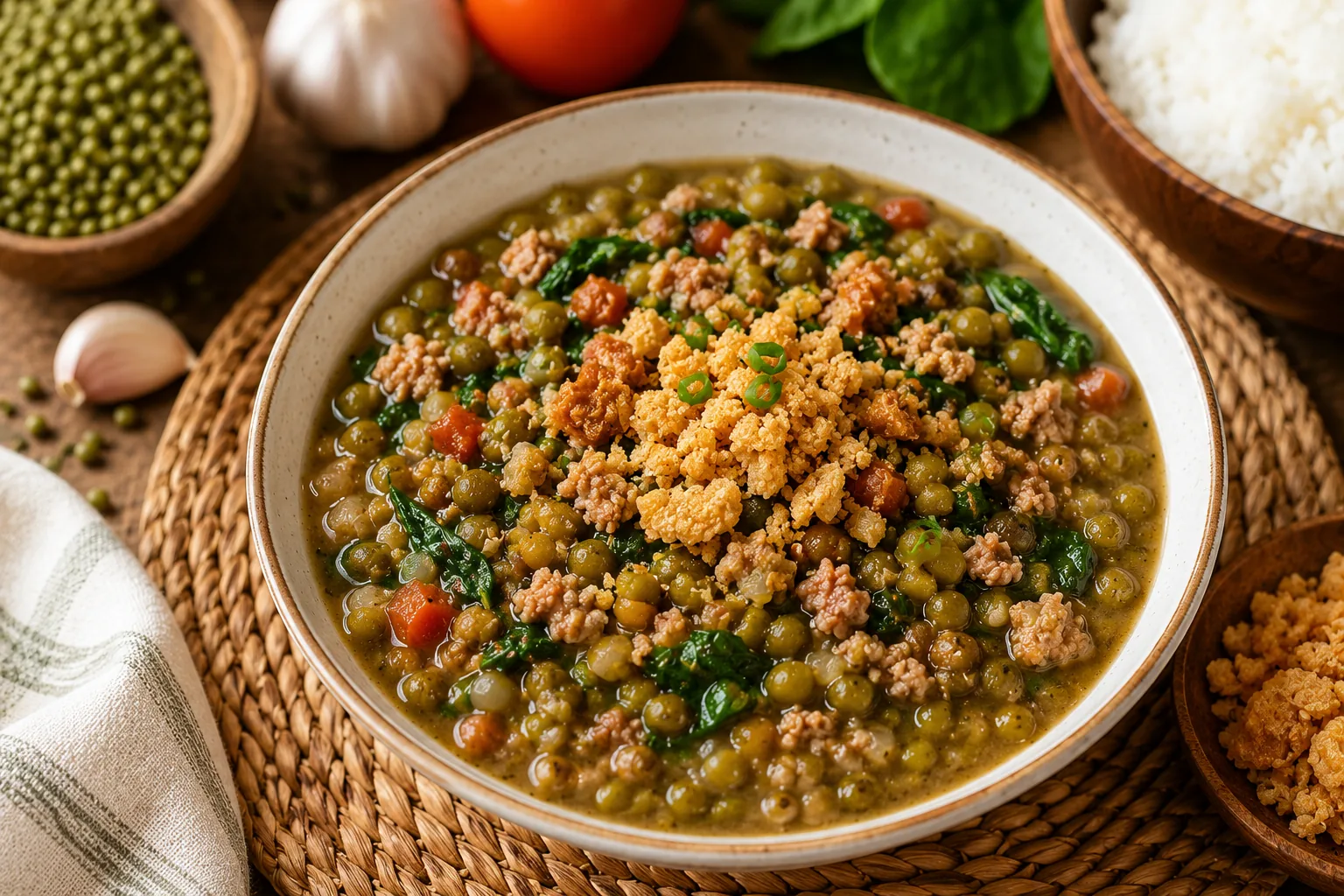
So ginisang munggo is essentially mung beans cooked with sautéed aromatics such as garlic, onion, and tomatoes, along with whatever other ingredients you’re adding.
Sounds simple enough.
But if you’ve spent any time around Filipino cooking, you already know what happens next:
Everybody has their own version.
Some families make their munggo with pork.
Others use shrimp or fish.
You’ll find versions with malunggay, ampalaya leaves, spinach, chicharon, and all kinds of other sahog (add-ins).
Some people like their munggo thick and almost stew-like.
Others prefer it masabaw—with plenty of broth.
And of course, whatever version you grew up eating is probably the one that tastes “right” to you.
That’s Filipino food for you.
So Why Does Munggo Friday Have Pork Now?
This is the funny part.
If the tradition of eating munggo on Fridays is connected to Catholics abstaining from meat…
Why is there pork in so much ginisang munggo today?
And why are we putting chicharon on top? 😂
Because food traditions change.
The original religious practice may help explain why munggo became associated with Friday, but for many Filipinos today, Munggo Friday is simply a food tradition.
It doesn’t necessarily mean the dish has to be meatless anymore.
Modern versions might have ground pork, pork belly, chicharon, shrimp, fish, or whatever the cook prefers.
The tradition stayed.
The recipe evolved.
And I actually love that about food.
We inherit dishes and traditions from the people before us, but we also change them a little as they become part of our own kitchens.
Ginisang Munggo Is Definitely Not Just for Fridays
At least it wasn’t in our house.
If we wanted munggo, we ate munggo.
Tuesday, Wednesday, Saturday—it didn’t really matter.
And I think that’s worth mentioning because Munggo Friday is a Filipino tradition, not a rule.
Ginisang munggo is simply good everyday Filipino food.
It’s affordable, filling, comforting, and easy to make enough for the whole family.
Serve it with hot rice and something fried or crispy on the side, and you have the kind of meal that doesn’t need to be fancy to be really good.
And that’s something I want to share more of here.
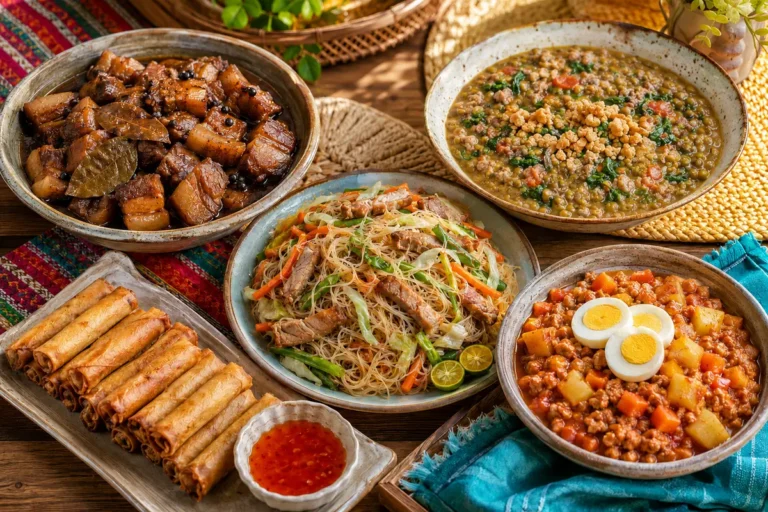
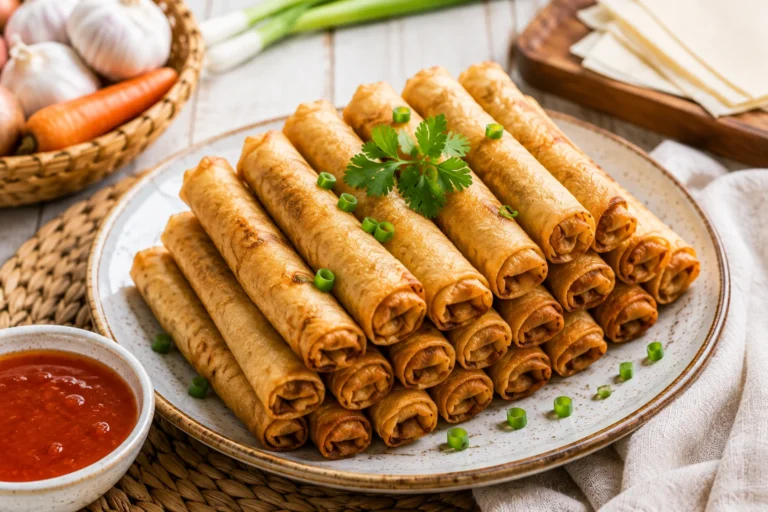
When people think about Filipino food, it’s easy to focus on dishes like adobo, lumpia, pancit, and the foods we serve during celebrations.
But Filipino food is also the everyday stuff.
The ulam that was sitting on the table at lunchtime.
The food from the carinderia down the street.
The dishes we ate so often growing up that we didn’t really think there was anything special about them.
Munggo was one of those foods for me.
Funny How Food Changes When You’re Far From Home
Growing up in the Philippines, I didn’t sit there eating munggo thinking:
I need to appreciate this moment.
It was lunch.
But living in the U.S. has made me appreciate a lot of those ordinary Filipino foods differently.
Sometimes it’s the simplest things that bring you back.
The smell of garlic and onions sautéing.
Tomatoes softening in the pan.
A pot of munggo simmering on the stove.
Then you sit down with a bowl of it and some hot rice, and for a little while, something that once felt completely ordinary suddenly feels like home again.
Maybe that’s why I enjoy sharing these dishes so much now.
They’re not just recipes.
They’re little pieces of everyday life in the Philippines that I didn’t realize I’d miss until I was thousands of miles away.
Want to Make Ginisang Munggo?
My ginisang munggo recipe is made with mung beans, ground pork, tomatoes, spinach or malunggay, and fish sauce, then topped with crushed chicharon.
Is the pork and chicharon particularly faithful to the old meatless-Friday explanation we just talked about?
Probably not.
But that’s how I like my munggo.
→ Get my Ginisang Munggo Recipe
Serve it with plenty of hot rice.
Friday optional.
Sources
I love learning more about the stories behind the Filipino food I grew up with, but food history isn’t always as simple as one definitive origin story. For the history behind the Ginisang Munggo Friday tradition, I referenced these sources:
- GMA News Online: Why Is Ginisang Monggo Usually Served Every Friday in Filipino Households? — discusses both the Catholic meat-abstinence tradition and the practical explanation involving food storage before refrigerators were common.
- USDA Foreign Agricultural Service: Philippines Pulses Market Brief — discusses munggo consumption in the Philippines and its association with Fridays and the Catholic Lenten tradition.
- Esquire Philippines: Why Friday Is Ginisang Monggo Day in the Philippines — explores the religious and practical explanations behind the Filipino Friday munggo tradition.
As with many food traditions passed down through generations, the exact origin of Munggo Friday isn’t completely documented. I’ve treated these as possible explanations for the tradition rather than presenting either one as absolute fact.