Filipino Pork Adobo Recipe
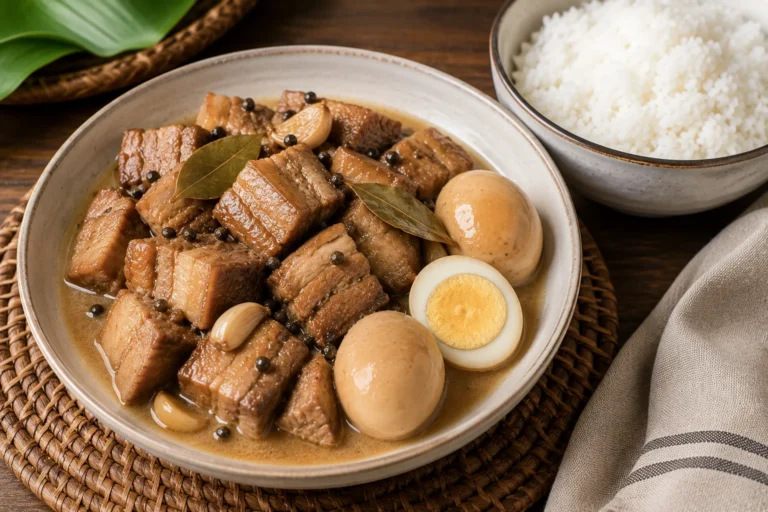
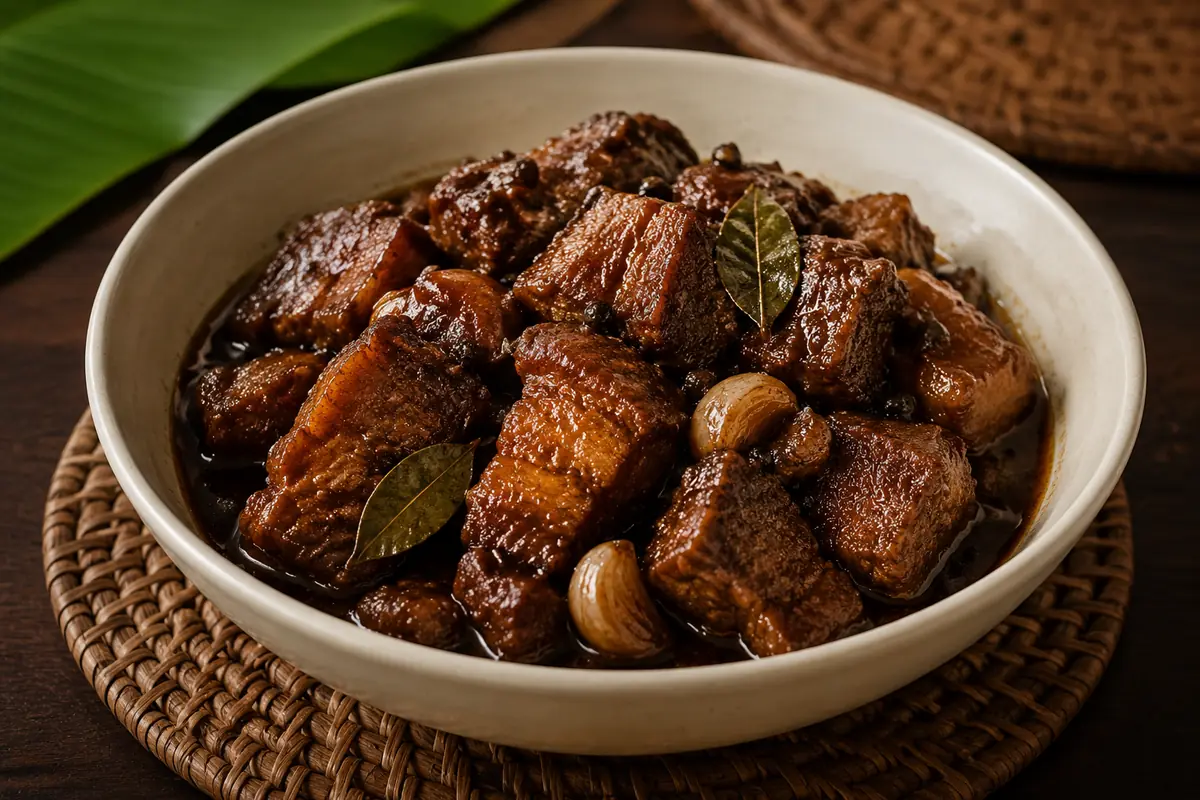
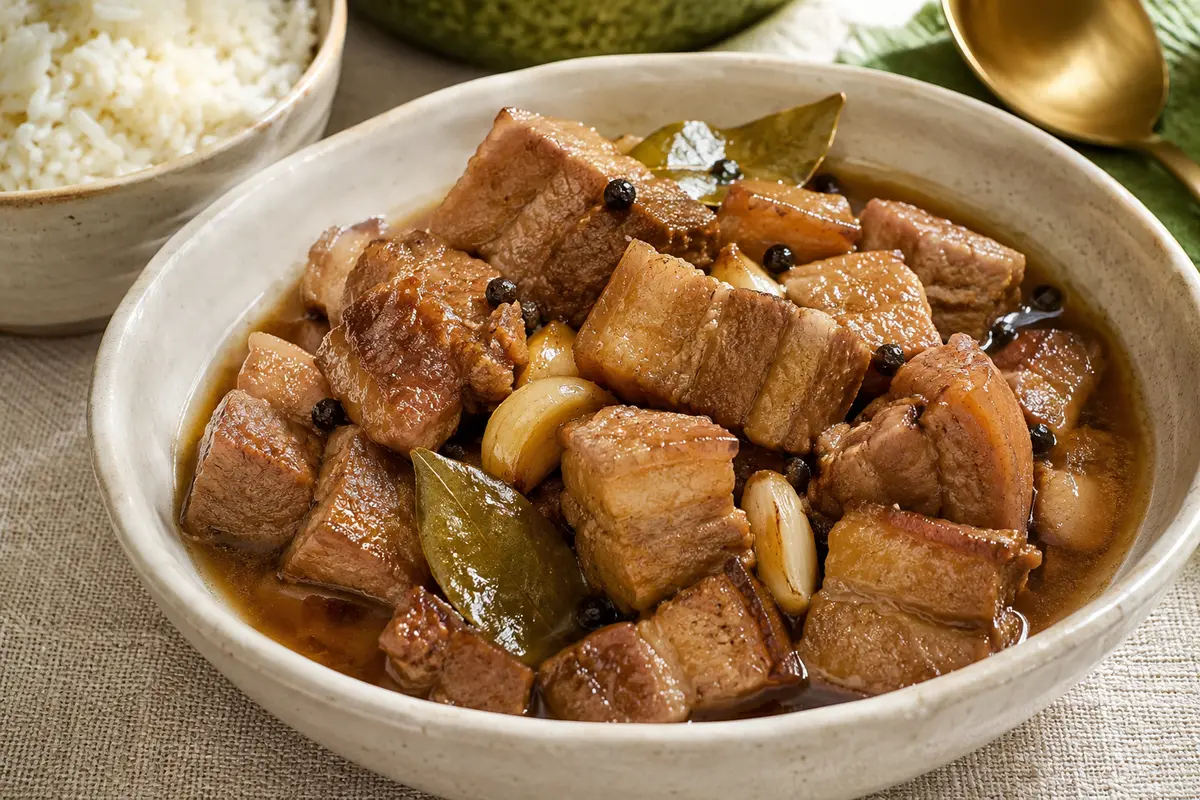
This pork adobo recipe is one I can make over and over again and never get tired of. Tender pieces of pork simmer with soy sauce, vinegar, lots of garlic, bay leaves, and peppercorns—simple ingredients that somehow turn into the kind of food that makes you want another scoop of rice.
There are so many ways to make adobo in the Philippines, and every family seems to have its own version. This is how I make mine at home—savory, garlicky, a little tangy, and with plenty of sauce for the rice.
(Affiliate Disclosure: As an Amazon Associate, I earn from qualifying purchases. This means I may earn a small commission if you purchase through links on this page, at no additional cost to you.)

What is Filipino Pork Adobo?
Pork adobo is one of the many versions of adobo you’ll find in the Philippines. Pork is simmered in a savory, tangy sauce made with vinegar, soy sauce, garlic, bay leaves, and whole black peppercorns until the meat is tender and full of flavor.
There really isn’t just one “correct” way to make adobo. Recipes can change from one family or region to another, and that’s part of what makes it such a special Filipino dish. \
What Makes My Pork Adobo Different?
Like many Filipino families, I have my own way of making adobo at home. My version starts with the familiar combination of soy sauce, vinegar, garlic, bay leaves, and whole black peppercorns, but I also add onion, oyster sauce, and a little butter.
I like the extra savory flavor the oyster sauce adds, while the butter gives the sauce a little more richness. I also use brown sugar when needed to help balance the saltiness of the soy sauce and the tanginess of the vinegar without making the adobo noticeably sweet.
I brown the pork first before adding the sauce, then let everything simmer until the pork is tender and the sauce has reduced enough to spoon generously over rice. It may not be the way every Filipino family makes adobo—and that’s exactly the beauty of adobo. This is simply the version I make and enjoy at home.
Why You’ll Love This Filipino Pork Adobo
- The pork becomes tender while simmering in the rich, savory sauce.
- Soy sauce, vinegar, garlic, and peppercorns create that familiar Filipino adobo flavor.
- Browning the pork first adds even more flavor to the finished dish.
- It uses simple ingredients that are easy to keep in your pantry.
- It’s especially delicious served with plenty of warm rice.
Ingredients You’ll Need
- 2 lbs pork shoulder, cubed
- ½ cup soy sauce
- ½ cup white vinegar
- 2 tbsp oyster sauce
- 1 cup water
- 8 garlic cloves, crushed
- 1 medium onion, chopped
- 2 bay leaves
- 1 tsp whole black peppercorns
- 1 tbsp brown sugar, optional
- 1 tbsp cooking oil
- 2 tbsp butter
How to Make Filipino Pork Adobo
- Brown the pork. Heat the cooking oil in a pot over medium-high heat. Add the pork and cook until lightly browned.
- Add the aromatics. Add the butter, onion, and garlic. Cook until the onion begins to soften and the garlic is fragrant.
- Add the sauce. Pour in the soy sauce, vinegar, oyster sauce, and water. Stir everything together and scrape the bottom of the pot to release the flavorful browned bits.
- Season the adobo. Add the bay leaves, whole black peppercorns, and brown sugar, if using.
- Simmer until tender. Bring to a boil, cover, reduce the heat, and simmer for 35–45 minutes, or until the pork is tender.
- Taste and adjust. Taste the sauce and adjust as needed. Add a little water if it is too salty or strong, or a small amount of brown sugar if you prefer a more balanced flavor.
- Reduce the sauce. Remove the cover and simmer for another 10–15 minutes, or until the sauce reduces to your preferred consistency.
- Serve. Serve hot with plenty of steamed rice and spoon some of that adobo sauce over the top.
Tips for the Best Pork Adobo
- Brown the pork first. This adds another layer of flavor before the pork simmers in the sauce.
- Don’t rush the simmer. Give the pork enough time to become tender and absorb all that adobo flavor.
- Adjust it to your taste. Adobo is personal! Add a little more vinegar if you like it tangier, or a touch of brown sugar if you prefer a little sweetness.
- Let the sauce reduce. I like my adobo with enough sauce for rice, but not so watery that all that flavor gets lost.
How to Store and Reheat Pork Adobo
Pork adobo is one of those dishes that tastes even better the next day because the meat has more time to absorb the sauce.
Let the adobo cool, transfer it to a covered container, and refrigerate it for up to three to four days. Keep the pork stored with its sauce so it stays moist and flavorful.
To reheat it, place the pork adobo in a saucepan over medium-low heat and stir occasionally until heated through. If the sauce has thickened too much in the refrigerator, add a small splash of water.
What to Serve With Pork Adobo
For me, you really can’t go wrong with a big bowl of hot steamed rice. The rice soaks up that savory, tangy adobo sauce, and honestly, that’s usually all I need. You can also serve it with vegetables or a simple Filipino side dish if you want to make it a bigger meal. If you love adobo but want to try a different version, my Chicken Adobo Instant Pot Recipe is an easy way to make another Filipino favorite.
Planning more meals for the week? → Explore these easy Filipino lunch ideas, including munggo, pancit bihon, lumpiang Shanghai, and pork giniling.
Frequently Asked Questions About Pork Adobo
What cut of pork is best for Filipino pork adobo?
I like using pork shoulder for my adobo because it gets nice and tender as it simmers and has enough fat to give the sauce plenty of flavor. It’s also usually more affordable than pork belly, especially when I’m making a big pot for the family. Pork belly works too if you like your adobo richer and fattier, but pork shoulder is my go-to for this recipe.
What is the ratio of soy sauce to vinegar for pork adobo?
For my pork adobo, I use a 1:1 ratio—½ cup soy sauce and ½ cup white vinegar for 2 pounds of pork. I also add 1 cup of water so there’s enough liquid for the pork to simmer until tender. Then I let the sauce reduce until it’s just how I like it—with plenty left to spoon over rice.
Do you need to let the vinegar cook before stirring adobo?
I know there’s a common Filipino cooking practice of letting the vinegar cook for a few minutes before stirring, but I don’t do that with my adobo. I add the soy sauce, vinegar, oyster sauce, and water together, give everything a stir, and let it simmer. That’s how I make mine at home, and my adobo turns out flavorful every time.
What do I do if my pork adobo is too salty?
If your adobo tastes too salty or strong, add a little water at a time, give it a stir, and taste it again. Remember that the sauce gets stronger as it reduces, so keep tasting as you go. You can also add a little brown sugar if you want to balance the saltiness and tang, but don’t add too much—you don’t want your adobo to suddenly taste sweet.
Can I make pork adobo without oyster sauce?
Absolutely. Oyster sauce is something I add to my version of pork adobo, but you don’t need it to make adobo. I just love the extra savory flavor it gives the sauce. If you don’t have it or prefer to leave it out, you can still make a delicious pot of adobo.
Can you freeze pork adobo?
Yes. Let the adobo cool and store the pork together with its sauce in a freezer-safe container. For best quality, use it within about 2 to 3 months. When you’re ready to eat it, thaw it in the refrigerator and reheat it thoroughly. If the sauce is a little too thick after reheating, just add a small splash of water.
Filipino Pork Adobo Recipe
Ingredients
Equipment
Method
- Brown the pork. Heat the cooking oil in a Dutch oven or heavy-bottomed pot over medium-high heat. Add the pork and cook until lightly browned on all sides.
- Add the aromatics. Add the butter, onion, and garlic. Cook for 2–3 minutes, or until the onion begins to soften and the garlic is fragrant.
- Add the sauce. Pour in the soy sauce, vinegar, oyster sauce, and water. Stir everything together and scrape the bottom of the pot to release the flavorful browned bits.
- Season the adobo. Add the bay leaves, whole black peppercorns, and brown sugar, if using.
- Simmer until tender. Bring the liquid to a boil, then cover the pot and reduce the heat to low. Simmer for 35–45 minutes, or until the pork is tender.
- Reduce the sauce. Remove the cover and simmer for another 10–15 minutes, or until the sauce reaches your preferred consistency.
- Taste and adjust. Taste the sauce and adjust as needed. Add a little water if it is too salty or strong, or a small amount of brown sugar if you prefer a more balanced flavor.
- Serve. Remove the bay leaves and serve the pork adobo hot with steamed rice. Spoon some of the adobo sauce over the top.
Notes
Want More Easy Filipino Dinner Ideas?
Take the guesswork out of dinner with my free Filipino Dinner Starter Kit. It includes five beginner-friendly recipes, a five-day meal plan, a one-trip grocery list, and a Filipino pantry guide.
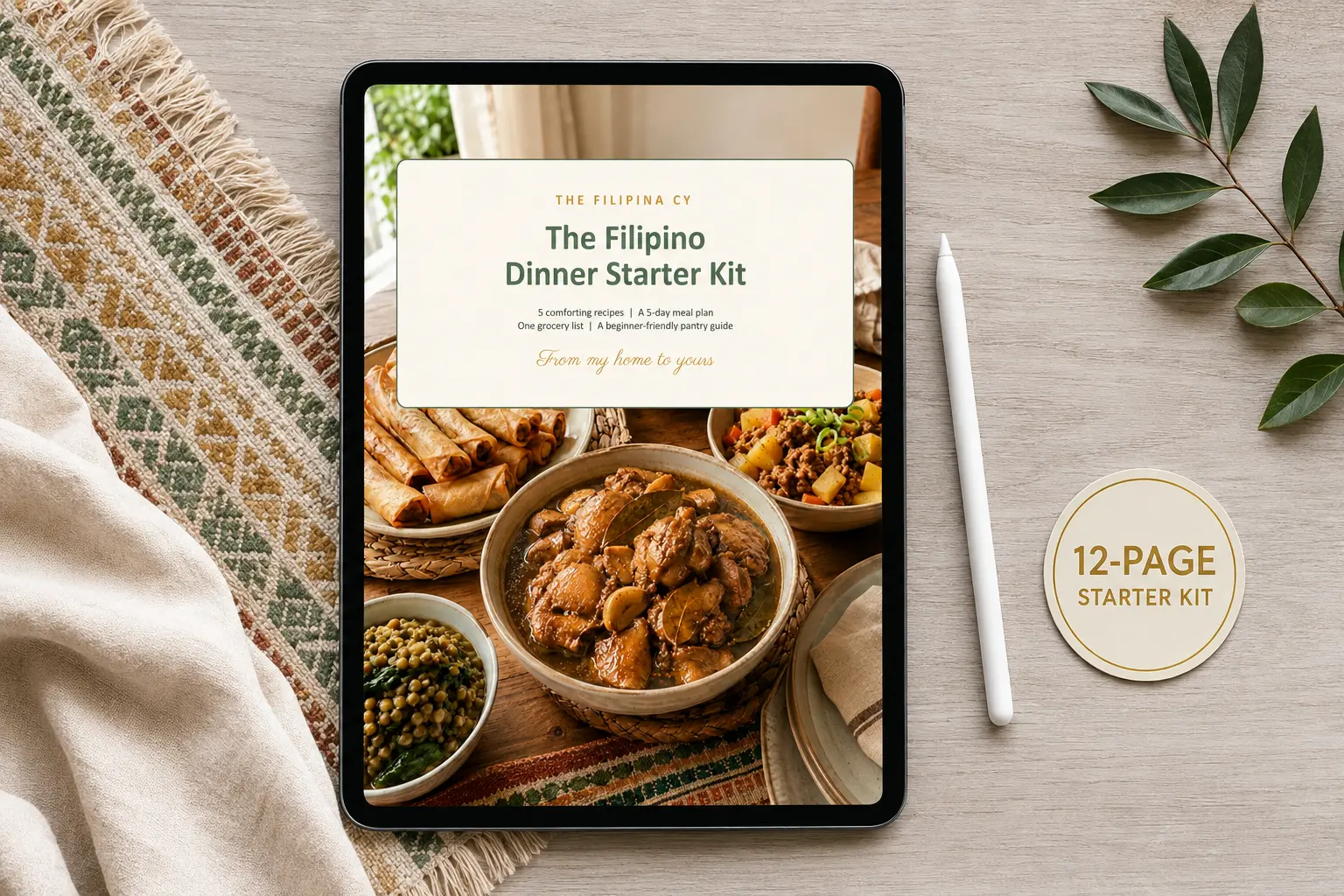
→ Get the Free Filipino Dinner Starter Kit
Kitchen Tools for Making Pork Adobo
You don’t need anything fancy to make a good pot of adobo, but having the right cookware definitely makes things easier. Here are a few kitchen essentials that are useful for this recipe and plenty of other Filipino dishes too.
Disclosure: As an Amazon Associate, I earn from qualifying purchases at no additional cost to you.
- Dutch Oven or Heavy-Bottomed Pot — Great for browning the pork and letting the adobo simmer slowly and evenly. → Shop My Pick
- Wooden Spoon — Handy for stirring the adobo and scraping up those flavorful browned bits from the bottom of the pot. → Shop My Pick
- Chef’s Knife — For cubing the pork and chopping the onion and garlic. → Shop My Pick
- Cutting Board — A sturdy cutting board makes all that prep much easier.→ Shop My Pick
Tried This Filipino Pork Adobo?
If you make this Filipino pork adobo, I’d love to know how it turned out! Leave a comment below and let me know how your family liked it. And if you’re looking for more Filipino food to try, explore my other Filipino recipes for more dishes that taste like home.