Filipino Pancit Canton Recipe – Easy One-Wok Stir-Fried Noodles
If you’re looking for an easy Filipino Pancit Canton recipe, this is a good one to have in your rotation.
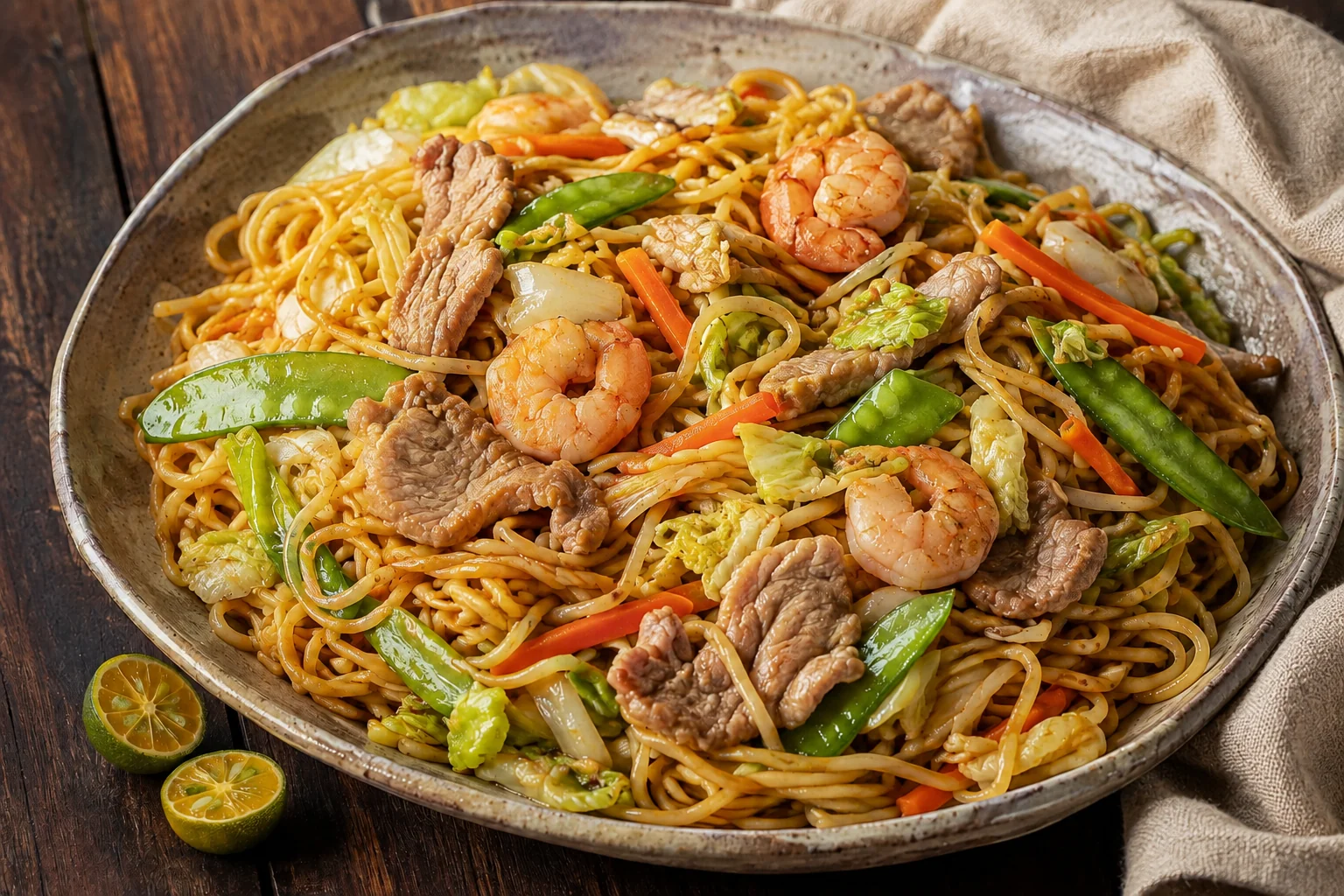
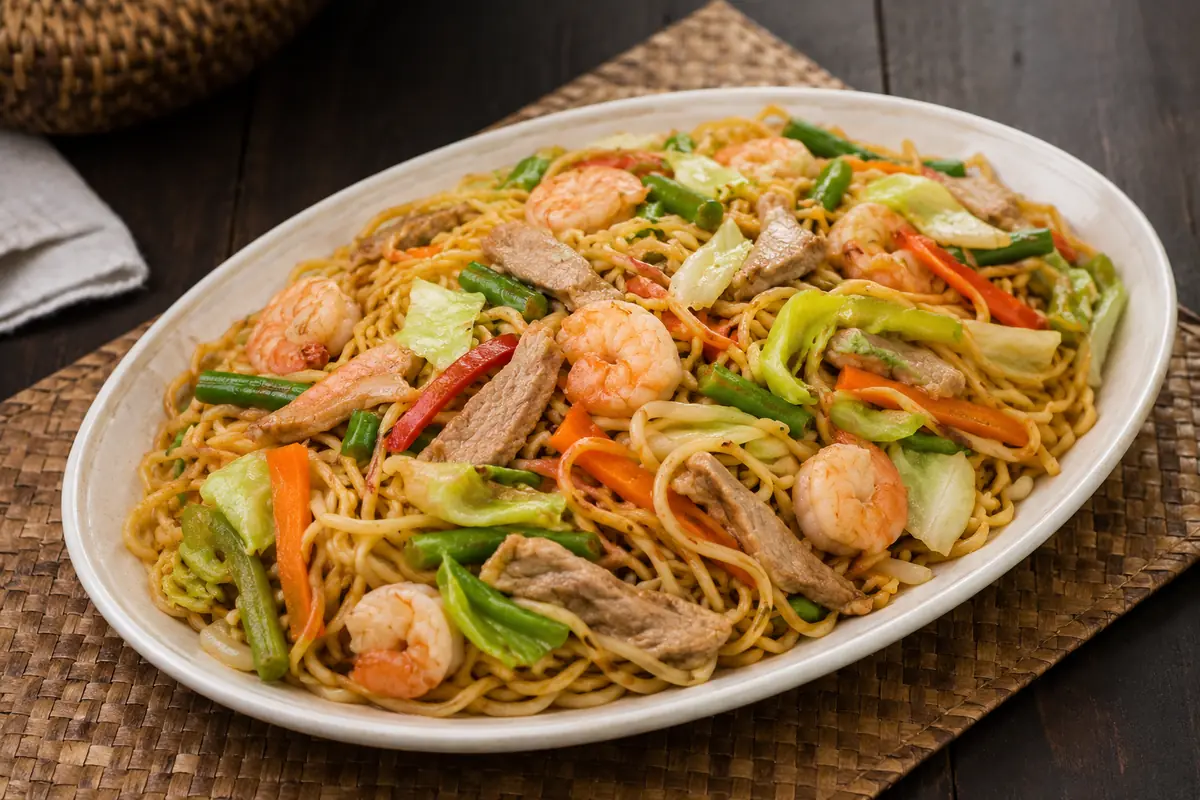
Pancit Canton is made with chewy flour-stick noodles, pork, colorful vegetables, and a savory sauce. Shrimp is optional, but pork is a must for me. It makes the dish filling enough for lunch or dinner while still being perfect for birthdays, potlucks, and family gatherings.
I cook everything in one wok, starting with the pork before adding the garlic, onion, and vegetables. Pancit Canton noodles cook much faster than bihon, so I don’t take the vegetables out and put them back later. By the time the noodles are ready, the vegetables are cooked but still have a little texture.
One wok, fewer dishes, and dinner gets to the table faster. That’s always a good thing.
What Is Filipino Pancit Canton?
Pancit Canton is a Filipino stir-fried noodle dish made with wheat-based flour-stick noodles, meat, vegetables, and a savory sauce.
In the Philippines, Pancit Canton refers to the wheat-based noodles used in this popular stir-fried dish.
Pancit Canton has Chinese roots, but it has become a familiar part of Filipino cooking. You’ll often see it served at birthdays because long noodles traditionally symbolize long life.
But you definitely don’t need to wait for someone’s birthday to make it.
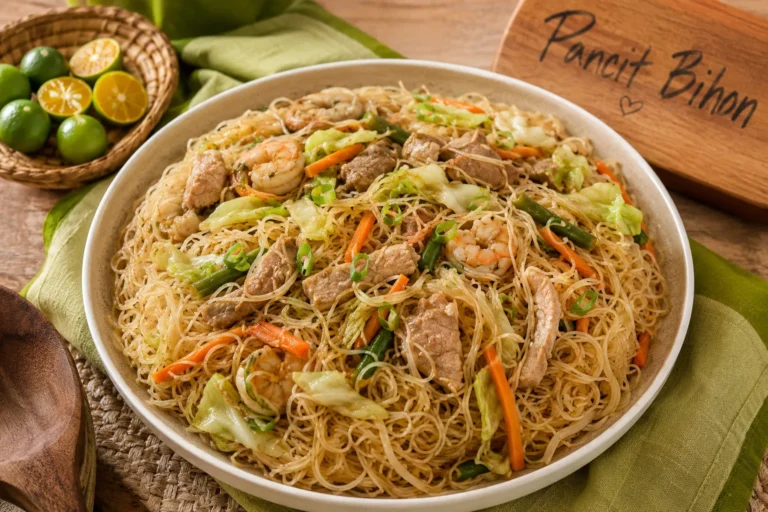
Pancit Canton is different from pancit bihon. Canton noodles are thicker, yellow, and chewy, while bihon noodles are thin and made from rice.
Canton noodles are also quicker and easier to cook. There’s no soaking involved, and they soften quickly once they’re added to the sauce.
Ingredients You’ll Need
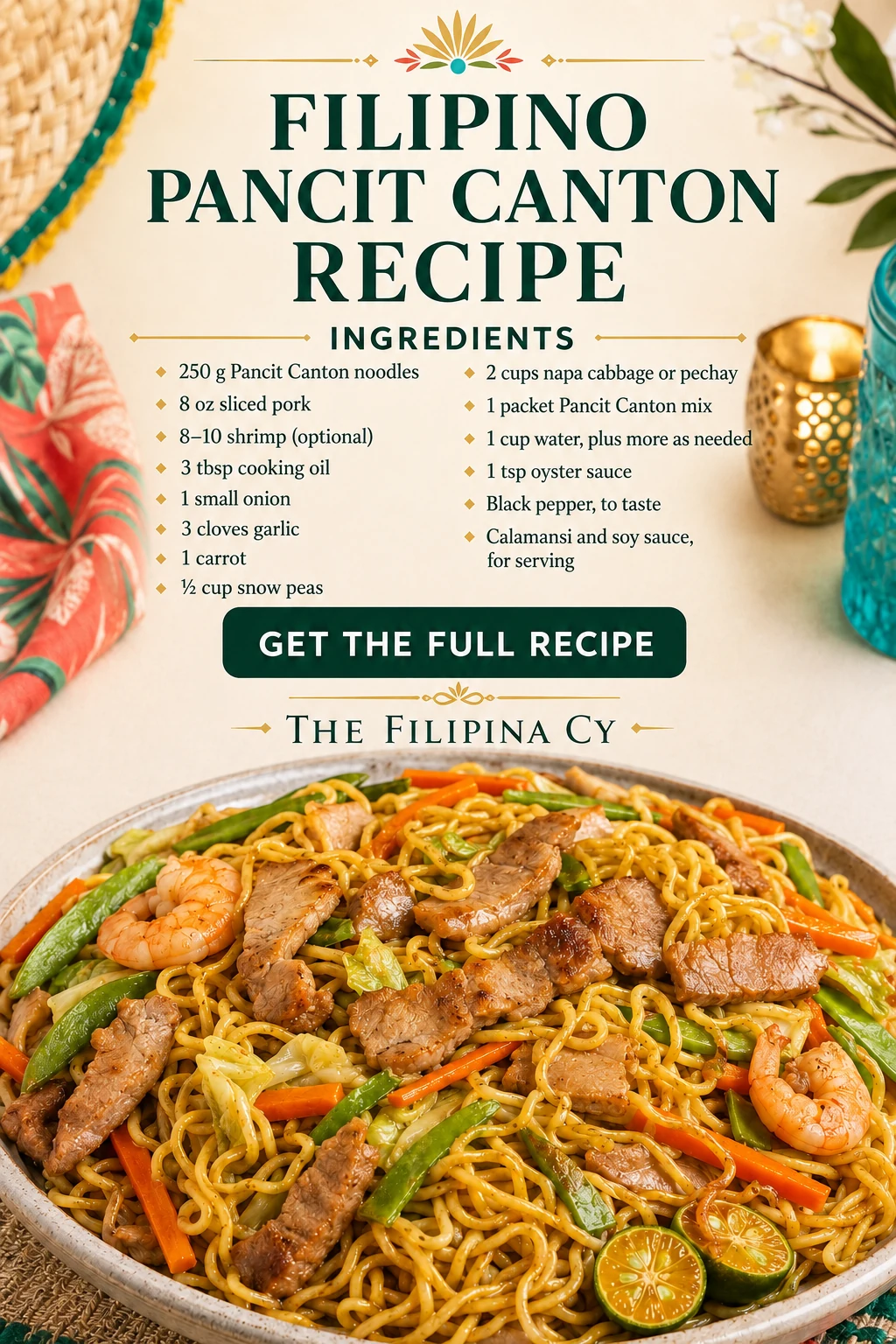
- 1 package (250 grams) dried Pancit Canton noodles
- 8 ounces pork shoulder or pork loin, thinly sliced
- 8–10 medium shrimp, peeled and deveined (optional)
- 3 tablespoons cooking oil
- 1 small onion, sliced
- 3 cloves garlic, minced
- 1 medium carrot, julienned
- ½ cup snow peas, ends trimmed
- 2 cups napa cabbage or pechay Baguio, sliced
- 1 packet (40 grams) Mama Sita’s Chopsuey/Pancit Canton Mix
- 1 cup water, plus more as needed
- 1 teaspoon oyster sauce
- Ground black pepper, to taste
- Calamansi or lemon wedges, for serving
- Soy sauce, for serving, if desired
How to Make Filipino Pancit Canton
1. Get Everything Ready
Before turning on the stove, slice the pork and vegetables, mince the garlic, slice the onion, and prepare the optional shrimp.
Stir-frying moves quickly, especially once the noodles go into the wok. This is not the recipe where you want to realize halfway through that you still need to cut the carrots.
Dissolve the Mama Sita’s Chopsuey/Pancit Canton Mix in 1 cup of water and set it aside.
There’s no need to soak the Pancit Canton noodles. Keep them dry until you’re ready to add them directly to the wok.
2. Brown the Pork
Heat 3 tablespoons of cooking oil in a large wok over medium-high heat.
Add the thinly sliced pork and cook for about 4–5 minutes, stirring occasionally, until lightly browned and completely cooked.
Give the pork a little time to brown before moving it around too much. That bit of color adds more flavor to the entire dish.
3. Add the Garlic and Onion
Add the minced garlic and sliced onion directly to the pork.
Sauté everything together for about 1 minute, or until the onion begins to soften and the garlic smells really good.
You know that smell.
4. Add the Vegetables
Add the carrots and snow peas to the wok. Stir-fry them with the pork, garlic, and onion for about 1 minute.
Add the sliced napa cabbage or pechay Baguio.
Half-cook the vegetables and leave them in the wok. They’ll finish cooking with the sauce and noodles.
Pancit Canton cooks much faster than bihon, so there’s no need to take the vegetables out and add them back later.
5. Add the Optional Shrimp
If you’re using shrimp, add it after the vegetables are halfway cooked.
Stir-fry it for about 1 minute, just until it begins to turn pink.
It doesn’t need to be fully cooked yet. It will finish cooking with the sauce and noodles, which helps keep it from becoming tough or rubbery.
6. Make the Sauce
Pour the dissolved Pancit Canton seasoning mixture directly into the wok.
Add 1 teaspoon of oyster sauce and give everything a good stir.
Bring the liquid to a gentle boil. Scrape the bottom of the wok as you stir so all those flavorful browned pieces from the pork become part of the sauce.
7. Add the Noodles
Add the dried Pancit Canton noodles directly to the simmering sauce.
Using tongs or two spatulas, gently lift and toss the noodles with the pork, vegetables, optional shrimp, and sauce.
Cook for about 3–5 minutes, or until the noodles are tender and have absorbed most of the liquid.
If the noodles are still firm and the wok is becoming dry, add more water a few tablespoons at a time.
Don’t pour in too much water at once. Pancit Canton noodles soften quickly, and you want them moist and flavorful—not swimming in sauce.
8. Taste Before You Season
Taste the noodles before adding any extra seasoning.
The Pancit Canton mix and oyster sauce already contain salt, so you may not need much more.
Add ground black pepper as needed. If you want a little more saltiness, add a small amount of soy sauce—but taste first.
Gently toss everything together one more time, making sure the pork and vegetables are evenly distributed throughout the noodles.
9. Time to Eat
Transfer the Pancit Canton to a large serving platter and serve it while it’s hot.
Serve with calamansi or lemon wedges and optional soy sauce on the side.
Don’t skip that squeeze of calamansi if you have it. It brightens all those savory flavors and makes the finished dish even better.
Shrimp or No Shrimp?
Either!
I like adding shrimp when I want the dish to feel a little more special, but it’s completely optional.
The pork is staying, though. It gives the noodles plenty of flavor and makes the dish filling enough without seafood.
Can I Use Different Vegetables?
Of course.
Carrots, snow peas, and napa cabbage or pechay Baguio are a classic combination, but Pancit Canton is also a good way to use vegetables you already have.
You can try:
- Green beans
- Bell peppers
- Broccoli
- Celery
- Regular green cabbage
Keep the vegetables thinly sliced so they cook quickly.
Add firmer vegetables first and softer vegetables later. Carrots and green beans need a little more time, while cabbage cooks very quickly.
And don’t add every vegetable in your refrigerator at once.
Too many vegetables can overcrowd the wok and make everything steam instead of stir-fry.
What Do You Eat With Pancit Canton?
Pancit Canton is already a complete meal because it has noodles, pork, and vegetables.
But if you’re making a larger Filipino spread, it goes really well with:
- Lumpiang Shanghai
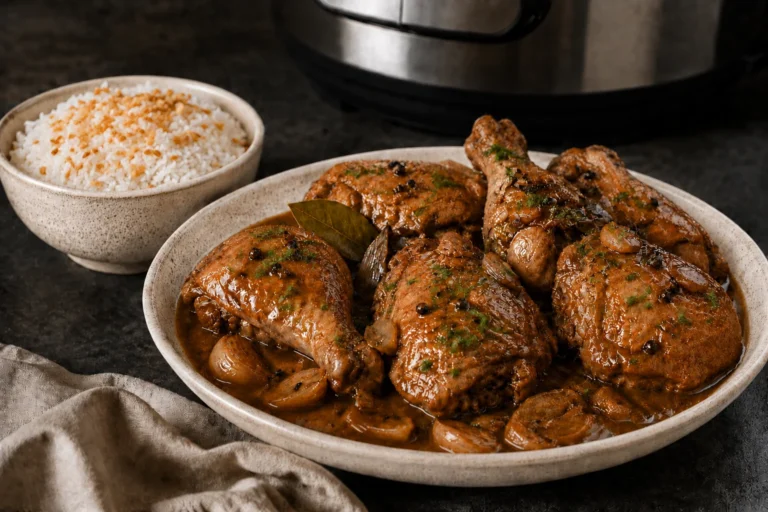
- Pork adobo
- Filipino barbecue
- Fried or roasted chicken
- Calamansi or lemon wedges
Pancit Canton and crispy Lumpiang Shanghai are always a good combination for birthdays and family gatherings.
And yes, some Filipinos eat pancit with rice or sweet bread.
Noodles and rice together may sound like a lot of carbs, but I’m not here to judge your plate. 😄
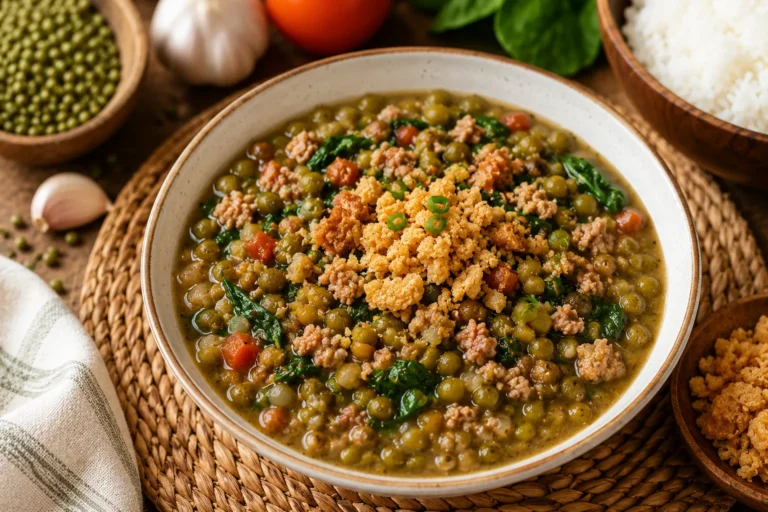
Looking for more practical meals for busy weekdays? Explore these Filipino food ideas for lunch featuring adobo, munggo, pancit bihon, lumpiang Shanghai, and pork giniling.
How to Store and Reheat Pancit Canton
Leftover Pancit Canton makes an easy lunch the next day.
The noodles will continue absorbing the sauce as they sit, so they may look a little drier the next day. A small splash of water while reheating usually brings them right back.
Today’s party food can easily become tomorrow’s lunch.
Let the leftover noodles cool before transferring them to an airtight container.
Store them in the refrigerator for up to 3 days.
When you’re ready to eat, reheat only the portion you need. Add a small splash of water to keep the noodles from drying out.
For the stovetop, place the noodles in a skillet or wok, add a little water, and cover for about a minute. Then gently toss them over medium heat until hot.
I don’t recommend freezing Pancit Canton. The noodles and vegetables can become too soft after thawing.
Filipino Pancit Canton Recipe
Ingredients
Equipment
Method
- Cook the pork. Heat the cooking oil in a large wok over medium-high heat. Add the sliced pork and stir-fry until lightly browned and cooked through.
- Cook the shrimp, if using. Add the shrimp and cook just until pink and opaque. Transfer the shrimp to a plate so it doesn’t overcook.
- Sauté the aromatics. Add the onion and garlic to the wok. Cook for 1–2 minutes, until fragrant and slightly softened.
- Add the vegetables. Add the carrot, snow peas, and napa cabbage or pechay Baguio. Stir-fry for 2–3 minutes, keeping the vegetables slightly crisp.
- Make the sauce. Add the water, Pancit Canton seasoning mix, oyster sauce, and black pepper. Stir until the seasoning dissolves, then bring the liquid to a gentle simmer.
- Cook the noodles. Add the dried Pancit Canton noodles directly to the wok. Gently turn and separate them as they absorb the sauce. Add a small splash of water if the noodles become dry before they are tender.
- Finish the dish. Return the shrimp to the wok, if using. Toss everything together until the noodles are tender, evenly coated, and the vegetables are cooked but still have some texture.
- Serve. Serve hot with calamansi or lemon wedges and additional soy sauce, if desired.
Notes
Enjoy Your Pancit Canton
Serve your Pancit Canton while it’s hot and enjoy it with the people around your table.
And if your family makes Pancit Canton a little differently from mine, that’s completely normal. That’s one of the things I love about Filipino food—we can all make the same dish and still bring our own version to the table.
Whether you’re making it for a birthday, a family gathering, or a simple weeknight meal, this easy one-wok dish is always worth sharing.
As an Amazon Associate, I earn from qualifying purchases. This post may contain affiliate links at no additional cost to you.
Want More Easy Filipino Dinner Ideas?
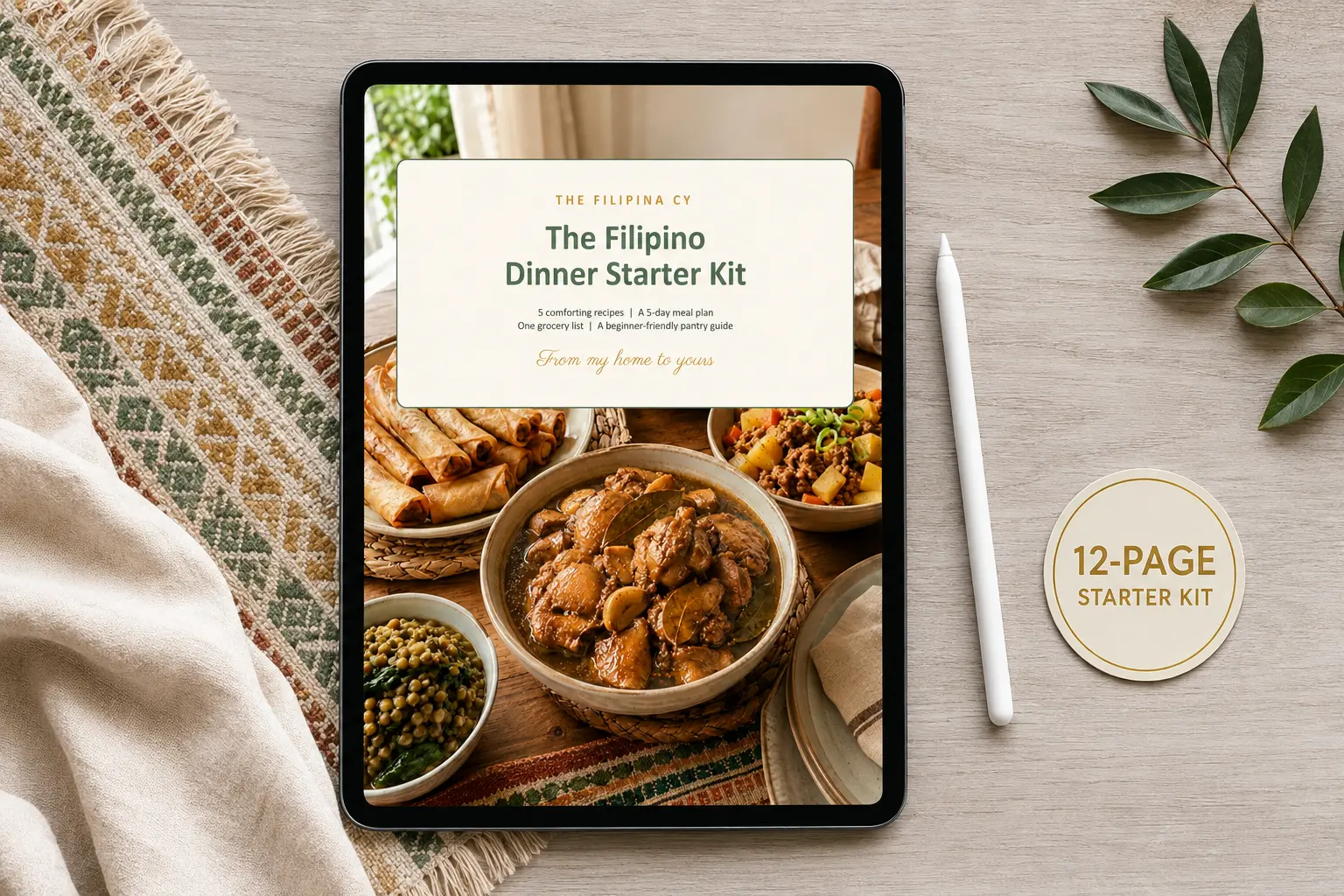
Take the guesswork out of dinner with my free Filipino Dinner Starter Kit. It includes five beginner-friendly recipes, a five-day meal plan, a one-trip grocery list, and a Filipino pantry guide.
→ Get the Free Filipino Dinner Starter Kit
As an Amazon Associate, I earn from qualifying purchases. This post may contain affiliate links at no additional cost to you.
My Kitchen & Cooking Essentials
These are some of my favorite kitchen tools and cooking essentials that make everyday cooking a little easier. If you’re looking for the tools I use for recipes like this one, you can find them here: