What Is Lumpiang Shanghai? The Story Behind the Filipino Party Favorite
Growing up in the Philippines, I never really questioned why Lumpiang Shanghai was called Lumpiang Shanghai. It was just lumpia—the crispy little rolls you expected to see at birthdays, Christmas, family gatherings, and pretty much any celebration with a lot of food on the table.
It wasn’t until much later that I actually thought about the name.
Why Shanghai?
Is it really from Shanghai? Is it Chinese? Or is this another one of those Filipino foods with a much more complicated story behind it?
So I started looking into it, and as it turns out, the answer isn’t as straightforward as I expected.
Lumpia does have Chinese roots, but the Lumpiang Shanghai we know and love today is very much part of Filipino food culture. And the reason we call this particular version Shanghai? Well, that part is still a little bit of a mystery.
Want to make it? → Get my Lumpiang Shanghai Recipe
What Is Lumpiang Shanghai?
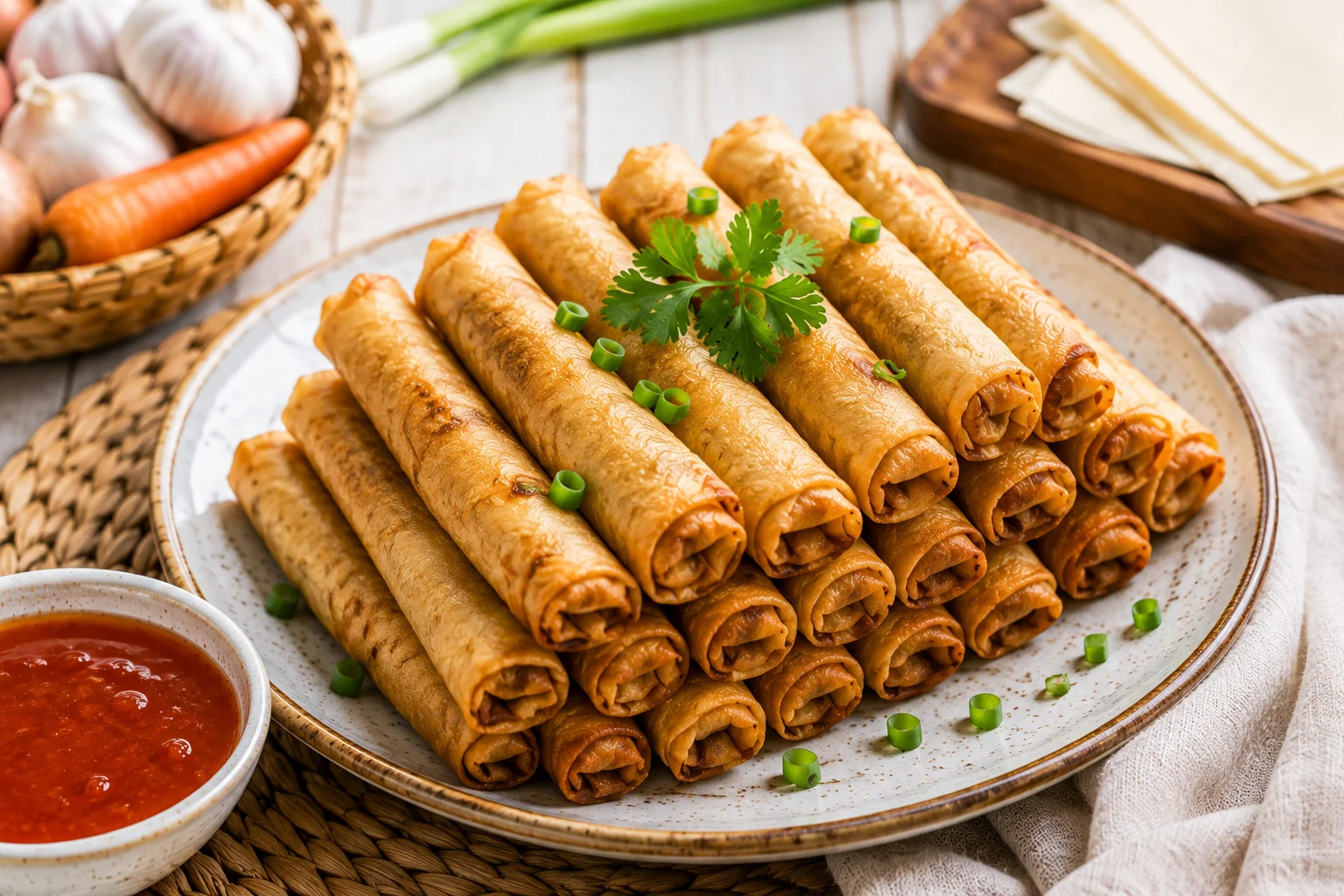
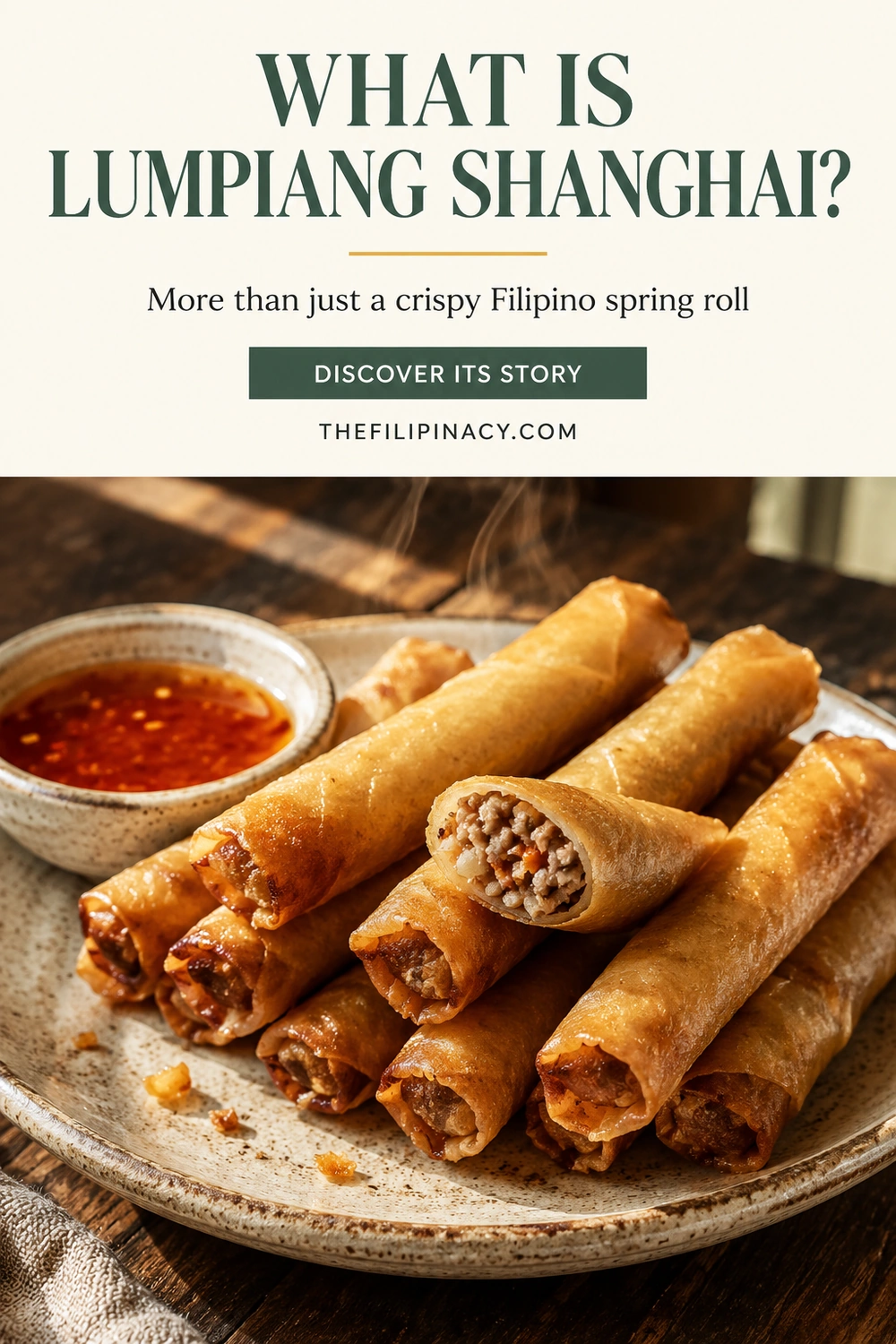
Lumpiang Shanghai is a Filipino fried spring roll usually filled with ground pork, finely chopped vegetables, and seasonings, all wrapped in a thin lumpia wrapper and fried until golden and crispy.
They’re usually smaller and thinner than many other types of lumpia, which also makes them dangerously easy to keep eating.
And something that might be confusing if you’re new to Filipino food: lumpia isn’t just one dish.
There are all kinds.
There’s lumpiang sariwa (fresh lumpia), which isn’t fried. There’s lumpiang ubod, traditionally made with heart of palm. There are vegetable versions, and then we have turon—the sweet one filled with banana and often jackfruit.
Lumpiang Shanghai is the crispy, meat-filled version that you’ll often see piled high on a platter at Filipino gatherings.
And somehow that platter never stays full for very long.
Is Lumpiang Shanghai Really From Shanghai?
This was the question I wanted answered too.
And no—Lumpiang Shanghai isn’t actually a dish from Shanghai.
The dish as we know it is Filipino, although lumpia itself has Chinese roots.
The word lumpia traces back to the Hokkien term lun-pia, and Chinese food traditions have influenced Filipino cooking for generations.
That part isn’t really surprising when you start looking at Filipino food. There are so many dishes we grew up eating that have influences from China, Spain, the United States, and our Southeast Asian neighbors.
But Filipinos didn’t simply copy these foods and leave them unchanged. Over generations, we adapted them to our own ingredients, tastes, and ways of cooking.
Lumpia is a really good example of that.
Then Why Do We Call It “Shanghai”?
You would think a dish this popular would have a nice, simple explanation for its name.
Apparently not.
I found plenty of explanations online for why Shanghai was added to the name, but I couldn’t find a solid historical source that definitively explains when or why Filipinos started calling this particular version Lumpiang Shanghai.
One possibility is that the name was meant to emphasize its Chinese association or to distinguish the meat-filled fried version from other kinds of Filipino lumpia.
But that’s an explanation—not something I can tell you is definitely what happened.
So I’m leaving this one as a food mystery.
We know lumpia has Chinese roots. We know Lumpiang Shanghai became part of Filipino cuisine. We just don’t seem to have a neat answer explaining exactly how Shanghai ended up in the name.
And honestly, I think that’s more interesting than pretending we know for sure.
Chinese Roots, But Very Much Filipino
This is actually one of the things I find interesting about Filipino food.
So many of the dishes we grew up eating have influences from somewhere else. But after generations of Filipinos cooking them, changing them, and making them for their families, they became part of our food too.
That’s what happened with lumpia.
What began with Chinese culinary influence eventually developed into many Filipino versions with different fillings, wrappers, sauces, and ways of preparing them.
And now imagine telling a Filipino that lumpia isn’t Filipino food.
Lumpiang Shanghai may have roots that connect to a much bigger history, but today it’s completely at home on a Filipino table.
Why Is Lumpiang Shanghai Always at Filipino Parties?
Okay, maybe not always.
But if you’ve been to enough Filipino parties, you know what I mean.
Birthdays. Christmas. Reunions. Potlucks. Fiestas. Sometimes even just a regular family get-together that somehow turns into enough food for 30 people.
There’s a good chance somebody made lumpia.
Even the Philippine Consulate General in New York has described Lumpiang Shanghai as something you’ll find at practically every kind of Filipino gathering, including birthdays, Christmas parties, reunions, and picnics.
And when you think about it, it makes perfect sense.
You can make a lot at once. You can roll them ahead of time and keep them in the freezer. They’re easy to serve. You don’t need utensils. Kids usually like them, and adults definitely aren’t complaining.
They’re basically made for sharing.
Although I’ve also seen people position themselves suspiciously close to the lumpia tray for a very long time.
Lumpiang Shanghai vs. Other Types of Lumpia
If you’re just starting to explore Filipino food, one thing that’s helpful to know is that lumpia doesn’t automatically mean Lumpiang Shanghai.
Here are a few versions you might come across:
Lumpiang Shanghai
This is the one we’re talking about here—small fried spring rolls usually filled with seasoned ground pork and vegetables.
Lumpiang Sariwa
Sariwa means fresh in Filipino. Instead of being fried, this version uses a soft wrapper and usually has a vegetable filling with sauce.
Lumpiang Ubod
Ubod means heart of palm, which is traditionally the main ingredient in the filling. You’ll often find it served fresh, although fried versions exist too.
Lumpiang Gulay
Gulay means vegetable, so this is vegetable lumpia. The exact filling can change depending on the recipe and who’s making it.
Turon
And then there’s dessert.
Turon is usually made with banana—and often jackfruit—wrapped in a lumpia wrapper and fried with caramelized sugar.
Savory lumpia followed by turon?
I’m not going to argue with that meal plan.
Everyone Seems to Have Their Own Version
This is another thing I love about Filipino recipes.
Ask several Filipino families how they make the same dish and you’re probably going to get several different answers.
Lumpiang Shanghai is no different.
Some people add more vegetables. Some use green onions. Some use different seasonings. Some roll them really skinny, while others make them a little bigger.
Then you get to the dipping sauce and that’s another conversation.
Sweet chili sauce, banana ketchup, sweet-and-sour sauce, vinegar—everyone has their preference.
My version uses ground pork with carrots, onion, plenty of garlic, parsley, and seasonings. I usually make about 50 spring rolls at a time, because if I’m already going through all that rolling, I might as well make enough to freeze some.
Assuming there are actually any left to freeze.
Why Lumpiang Shanghai Feels So Familiar
Technically, Lumpiang Shanghai can be called an appetizer.
But that description feels a little too simple.
For many Filipinos, it’s also party food. Celebration food. The thing you spot on the table and immediately grab before you even figure out what else you’re eating.
And maybe that’s why I never questioned the name growing up.
I didn’t think about where it came from or why it was called Shanghai. It was simply one of the foods that belonged on our table.
Learning about its Chinese roots doesn’t make it feel any less Filipino to me. If anything, it makes the story more interesting.
Filipino food has been shaped by generations of people, cultures, ingredients, and influences—and then by families who kept making those dishes their own.
Lumpiang Shanghai is just one very crispy example of that.
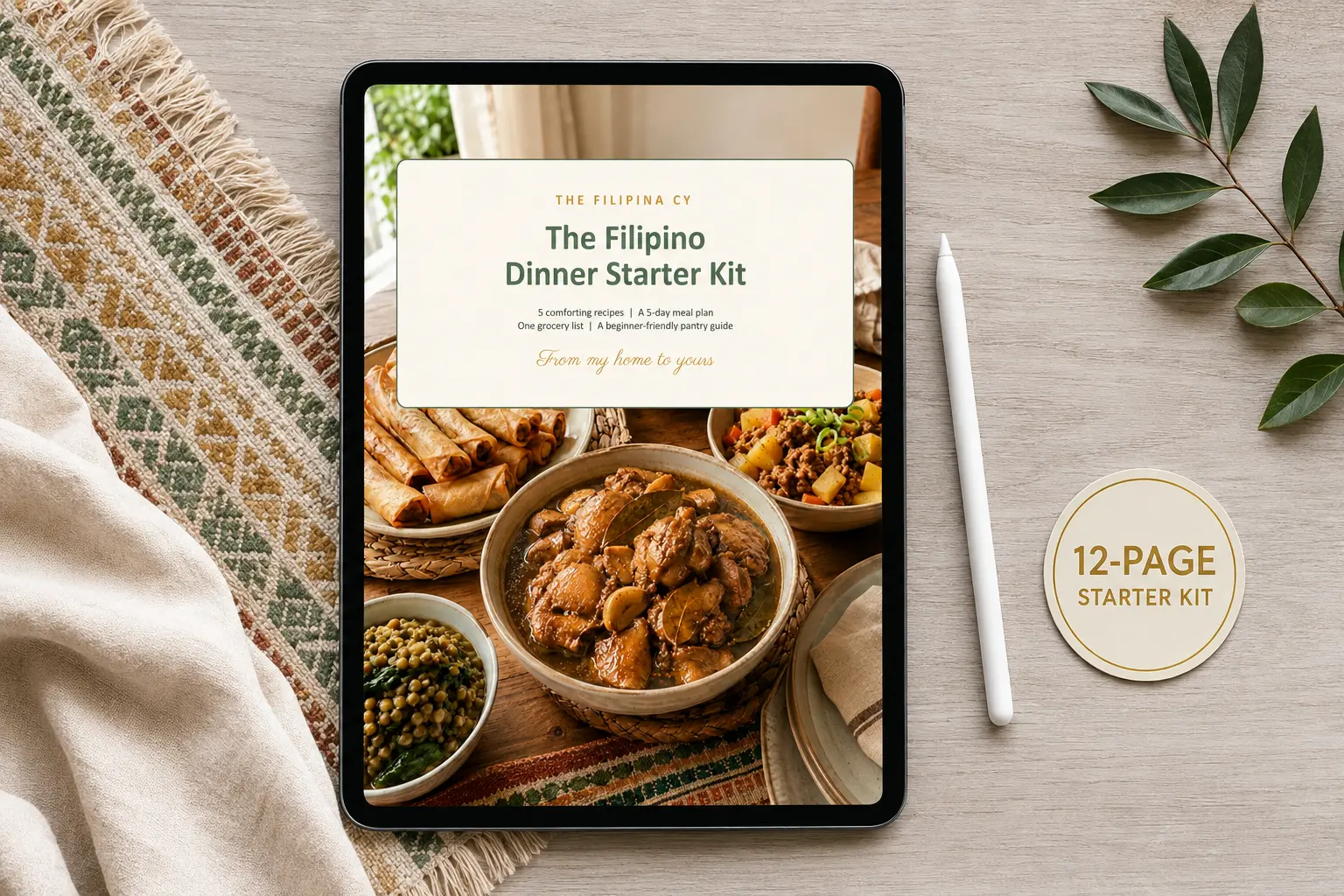
Get Your Free Filipino Dinner Starter Kit
Make Filipino cooking easier with five comforting recipes, a five-day meal plan, one grocery list, and a beginner-friendly pantry guide.
Ready to Make Lumpiang Shanghai?
Now that I’ve spent all this time talking about lumpia, there’s really only one thing left to do.
Make some.
My Lumpiang Shanghai recipe makes about 50 crispy spring rolls filled with seasoned ground pork. You can serve them right away or make a big batch and freeze some for later.
→ Get My Lumpiang Shanghai Recipe
And yes, 50 sounds like a lot.
Until the platter hits the table.