Pork Pochero Recipe – Filipino Pocherong Baboy
Affiliate Disclosure: This post may contain affiliate links. As an Amazon Associate, I earn from qualifying purchases at no additional cost to you.
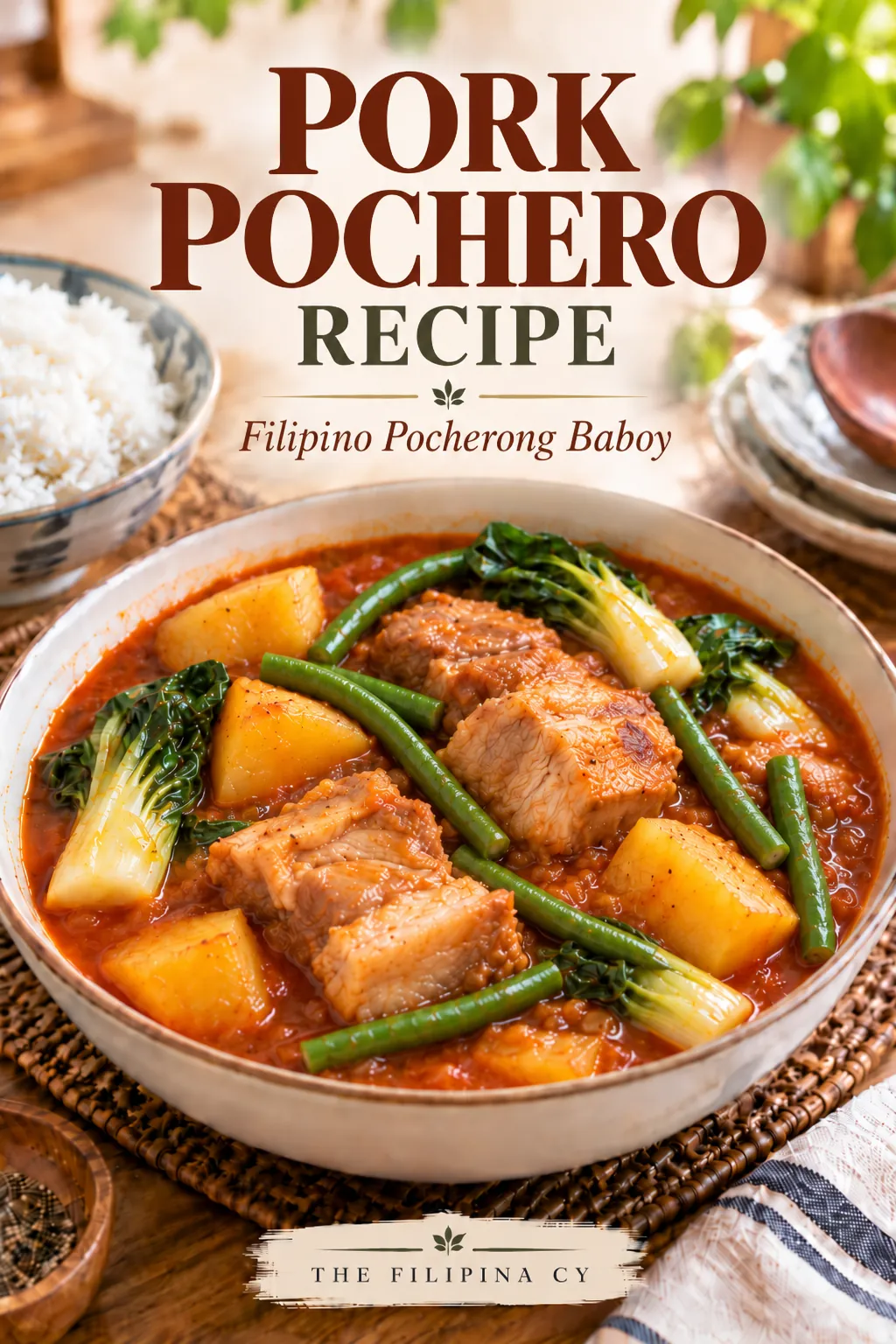
This Pork Pochero Recipe is my version of the Filipino pochero I grew up eating—tender pork simmered in a rich tomato-based sauce with potatoes, green beans, bok choy, and fresh tomatoes.
Pork Pochero is one of those recipes that is especially meaningful to me because it reminds me of my mom and the food she made for our family. Her pochero had cabbage, chorizo, saba bananas, green beans, and potatoes. That’s the version I remember eating growing up in the Philippines.
Over the years, though, the way I make pochero has changed a little for my own family.
My husband doesn’t really care for cabbage or saba in pochero, so I leave those out. I also don’t use chorizo. Instead, I make mine with green beans, bok choy, potatoes, and tomatoes.
For the pork, I usually use pork shoulder because it becomes tender as it simmers and has just enough fat to give the sauce plenty of flavor. You can also use another pork cut with a little fat.
We also like our pochero thicker and saucier rather than soupy, so I use two cans of tomato sauce and adjust the water depending on how much sauce we want. I season it with fish sauce and oyster sauce, then adjust both according to taste.
It may not be exactly the same pochero my mom made, but I love that it still carries that connection to the food I grew up with while becoming the version I now cook for my own family.
What Is Pork Pochero?
Pork Pochero, also called Pocherong Baboy, is a Filipino pork stew made with tender pork, a tomato-based sauce, potatoes, and vegetables.
The ingredients can vary from one Filipino family to another. Some versions include saba bananas, cabbage, chickpeas, or chorizo.
My version uses pork shoulder, potatoes, green beans, bok choy, and tomatoes, with fish sauce and oyster sauce adding extra savory flavor.
Why You’ll Love This Pork Pochero Recipe
Tender, Flavorful Pork
Browning the pork first adds more flavor before it slowly simmers in the tomato sauce.
Rich, Saucy Tomato Base
I use two 8-ounce cans of tomato sauce because my family prefers a richer, saucier Pork Pochero.
Simple Vegetables
Potatoes, green beans, bok choy, and fresh tomatoes make this hearty without needing a long list of ingredients.
Easy to Adjust
The amount of water, fish sauce, and oyster sauce can all be adjusted according to your taste and how saucy you like your pochero.
Perfect With Rice
That savory tomato sauce is especially good spooned over hot steamed rice.
Shop My Kitchen Essentials
You don’t need any special equipment to make Pork Pochero, but these are the kitchen tools I use for recipes like this.
Heavy-Bottomed Pot
Perfect for browning the pork and simmering the pochero until tender.
→ Shop My Heavy-Bottomed Pots
Cooking Spoon
Useful for sautéing the aromatics and stirring the sauce.
→ Shop Cooking Spoons
Chef’s Knife
For cutting the pork and preparing the vegetables.
→ Shop Chef’s Knives
Cutting Board
A sturdy cutting board makes all the prep easier.
→ Shop Cutting Boards
As an Amazon Associate, I earn from qualifying purchases at no additional cost to you.
Ingredients for Pork Pochero
- 2 lbs pork shoulder, cut into serving-size pieces
- 1–2 tbsp cooking oil
- 1 medium onion, chopped
- 5–6 cloves garlic, minced
- 2 medium tomatoes, chopped
- 2 tbsp fish sauce, or to taste
- 2 8-oz cans tomato sauce
- 2 tbsp oyster sauce, or to taste
- 3 cups water, plus more as needed or according to your preferred consistency
- 2 medium potatoes, peeled and cut into chunks
- 8 oz green beans, trimmed and cut into about 2-inch pieces
- 1 large bunch or 2 small bunches bok choy, washed and trimmed
- Ground black pepper, to taste
- Salt, if needed
How to Make Pork Pochero
1. Brown the Pork
Heat 1 to 2 tablespoons cooking oil in a large Dutch oven or heavy-bottomed pot over medium-high heat.
Add the pork shoulder and brown the pieces on several sides.
If your pot is crowded, brown the pork in batches so it sears instead of steaming.
2. Sauté the Aromatics
Push the browned pork toward the sides of the pot.
Add the onion and cook until it begins to soften.
Add the garlic and cook until fragrant, then add the chopped tomatoes.
Cook until the tomatoes begin to soften and release their juices.
3. Add the Fish Sauce
Add 2 tablespoons fish sauce, or according to taste.
Stir everything together and cook for another minute or two.
4. Add the Tomato Sauce
Pour in both 8-ounce cans of tomato sauce.
Stir well, scraping up any browned bits from the bottom of the pot.
5. Add the Oyster Sauce and Water
Add 2 tablespoons oyster sauce, or according to taste.
Pour in about 3 cups of water.
Adjust the amount of water as needed depending on how saucy you like your pochero. Start with less if you prefer a thicker sauce and add more if you want more sauce.
Stir well and bring everything to a boil.
6. Simmer Until the Pork Is Tender
Lower the heat, cover the pot, and simmer for about 40 to 50 minutes, or until the pork is tender.
Check occasionally and add a little more water if needed while the pork cooks.
7. Add the Potatoes
Add the potatoes and cook for about 8 to 10 minutes, or until almost tender.
8. Add the Green Beans
Add the green beans and cook for another 3 to 5 minutes.
I like them tender but still with a little texture.
9. Add the Bok Choy
Add the bok choy last.
Cook just until the stems are tender and the leaves have wilted.
10. Taste and Adjust
Taste the sauce and add more fish sauce or oyster sauce according to taste.
Add ground black pepper and salt only if needed.
You can also add a little more water depending on how much sauce you prefer.
11. Serve
Serve your Pork Pochero hot with plenty of steamed white rice.
Make sure to spoon some of that savory tomato sauce over the rice.
What to Serve With Pork Pochero
For me, Pork Pochero is best served with hot steamed rice.
The pork, potatoes, vegetables, and tomato sauce already make it a hearty Filipino ulam, so you really don’t need much else.
Spoon some of the sauce over your rice and add a little pork and vegetables to each serving.
If you enjoy comforting Filipino pork dishes, try these next:
- Filipino Pork Adobo Recipe
- Pork Sinigang Recipe
- Pork Menudo Recipe
- Pork Giniling Recipe
- Skinless Longganisa Recipe
How to Store Pork Pochero
Allow leftover Pork Pochero to cool before transferring it to an airtight container.
Store it in the refrigerator for 3 to 4 days.
The tomato sauce may thicken slightly as it sits.
How to Reheat Pork Pochero
Reheat Pork Pochero gently on the stovetop over medium-low heat until heated through.
If the sauce has become thicker in the refrigerator, add a small splash of water if needed.
Try not to simmer it longer than necessary because the vegetables will continue to soften.
Frequently Asked Questions
Is Pork Pochero a Soup or a Stew?
Pork Pochero can vary in consistency, but I make mine more like a saucy Filipino stew rather than a thin soup.
You can adjust the amount of water according to how much sauce you prefer.
Does Pork Pochero Need Saba Bananas?
No. Saba bananas are used in many versions of Filipino pochero, but not every family makes it the same way.
My mom used saba in hers, but I leave it out of the version I make for my family.
Does Pork Pochero Have Chorizo?
Some versions do.
My mom used chorizo in the Pork Pochero I grew up eating, but I don’t use it in my recipe.
Can I Use Pork Belly Instead of Pork Shoulder?
Yes.
Pork belly will make the pochero richer and fattier.
I prefer pork shoulder because it has enough fat for flavor while still giving you plenty of meaty pieces.
Can I Make Pork Pochero Ahead of Time?
Yes.
Pork Pochero reheats well, and the flavors may become even richer after sitting overnight.
If you know you’ll be reheating the dish later, avoid overcooking the green beans and bok choy the first time. You can also leave some of the vegetables uncooked and boil them separately when you’re ready to reheat and serve.

Pork Pochero Recipe
Ingredients
Equipment
Method
- Brown the Pork. Heat the cooking oil in a large Dutch oven or heavy-bottomed pot over medium-high heat. Add the pork and cook until browned on several sides.
- Sauté the Aromatics. Push the pork toward the sides of the pot. Add the onion and cook until slightly softened. Add the garlic and cook until fragrant, then add the tomatoes and cook until they begin to soften and release their juices.
- Add the Fish Sauce. Add the fish sauce and stir well. Cook for 1 to 2 minutes.
- Add the Tomato Sauce. Pour in both cans of tomato sauce and stir well.
- Add the Oyster Sauce and Water. Add the oyster sauce and about 3 cups of water. Adjust the amount of water according to your preferred consistency. Stir well and bring to a boil.
- Simmer Until Tender. Reduce the heat, cover, and simmer for about 40 to 50 minutes, or until the pork is tender. Add more water if needed while the pork cooks.
- Add the Potatoes. Add the potatoes and cook for about 8 to 10 minutes, or until almost tender.
- Add the Green Beans. Add the green beans and cook for another 3 to 5 minutes.
- Add the Bok Choy. Add the bok choy and cook just until the stems are tender and the leaves have wilted.
- Adjust the Seasoning. Taste and add more fish sauce, oyster sauce, black pepper, or salt if needed. Adjust the water according to your preferred consistency.
- Serve. Serve hot with steamed white rice.
Notes
Get My FREE Filipino Dinner Starter Kit
Want to cook more Filipino food at home without wondering what to make next?
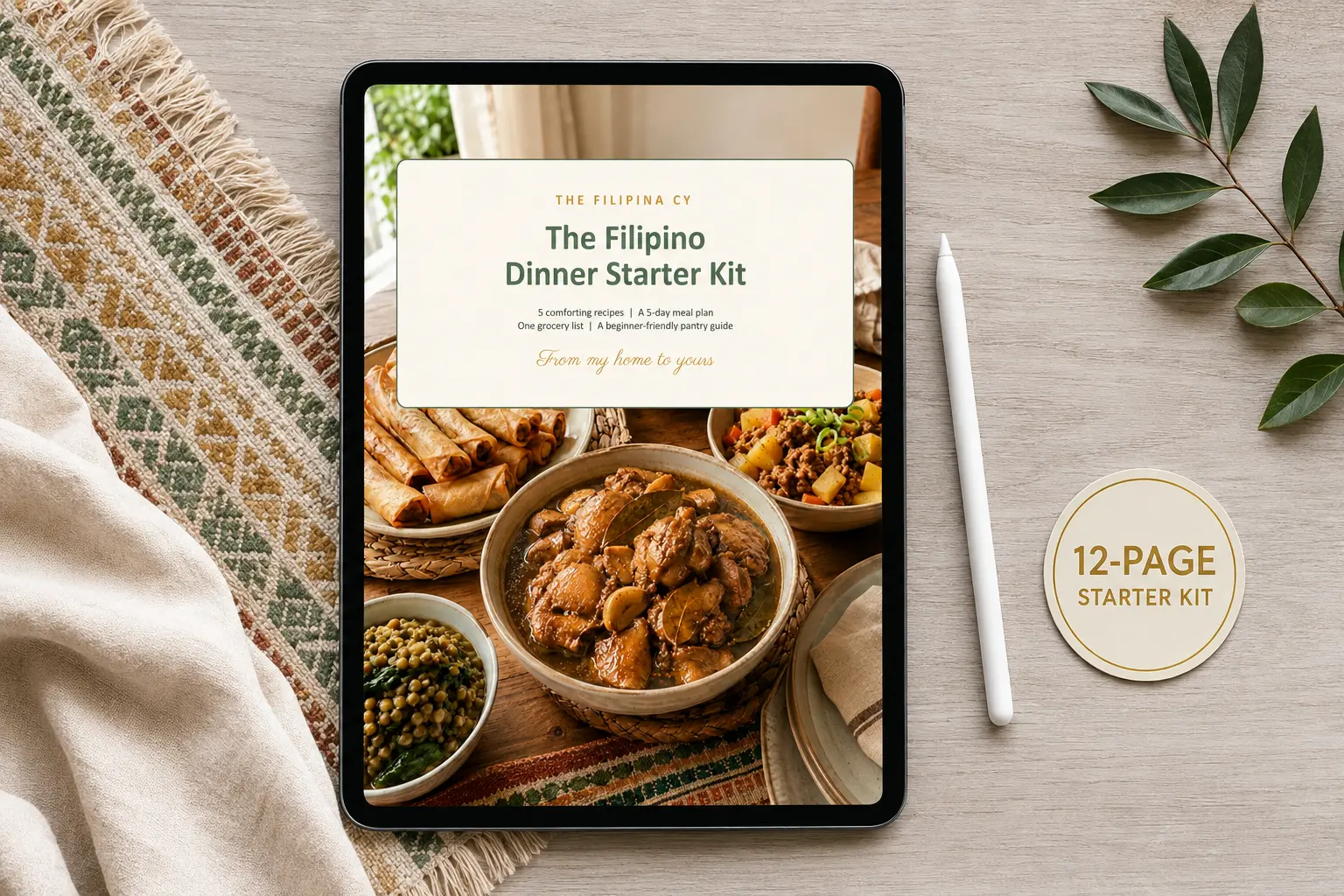
My FREE Filipino Dinner Starter Kit includes:
- 5 beginner-friendly Filipino recipes
- A 5-day Filipino meal plan
- One-trip grocery list
- Beginner Filipino pantry guide
→ GET THE FREE FILIPINO DINNER STARTER KIT
Tried This Pork Pochero Recipe?
If you make this Pork Pochero, I’d love to hear how it turned out.
Did your family make pochero with saba, cabbage, chorizo, or something completely different?
Leave a comment below and tell me how you grew up eating it.