Filipino Pancit Bihon: The Noodles That Always Show Up for the Party
If you grew up Filipino, you probably didn’t need anyone to tell you that pancit belongs at a birthday party. It was just…there.
I’ve eaten pancit for as long as I can remember, but I never really stopped to think about why it was always at birthdays and celebrations. Someone brings the cake, there’s usually lumpia somewhere on the table, and of course, there’s a big tray of pancit.
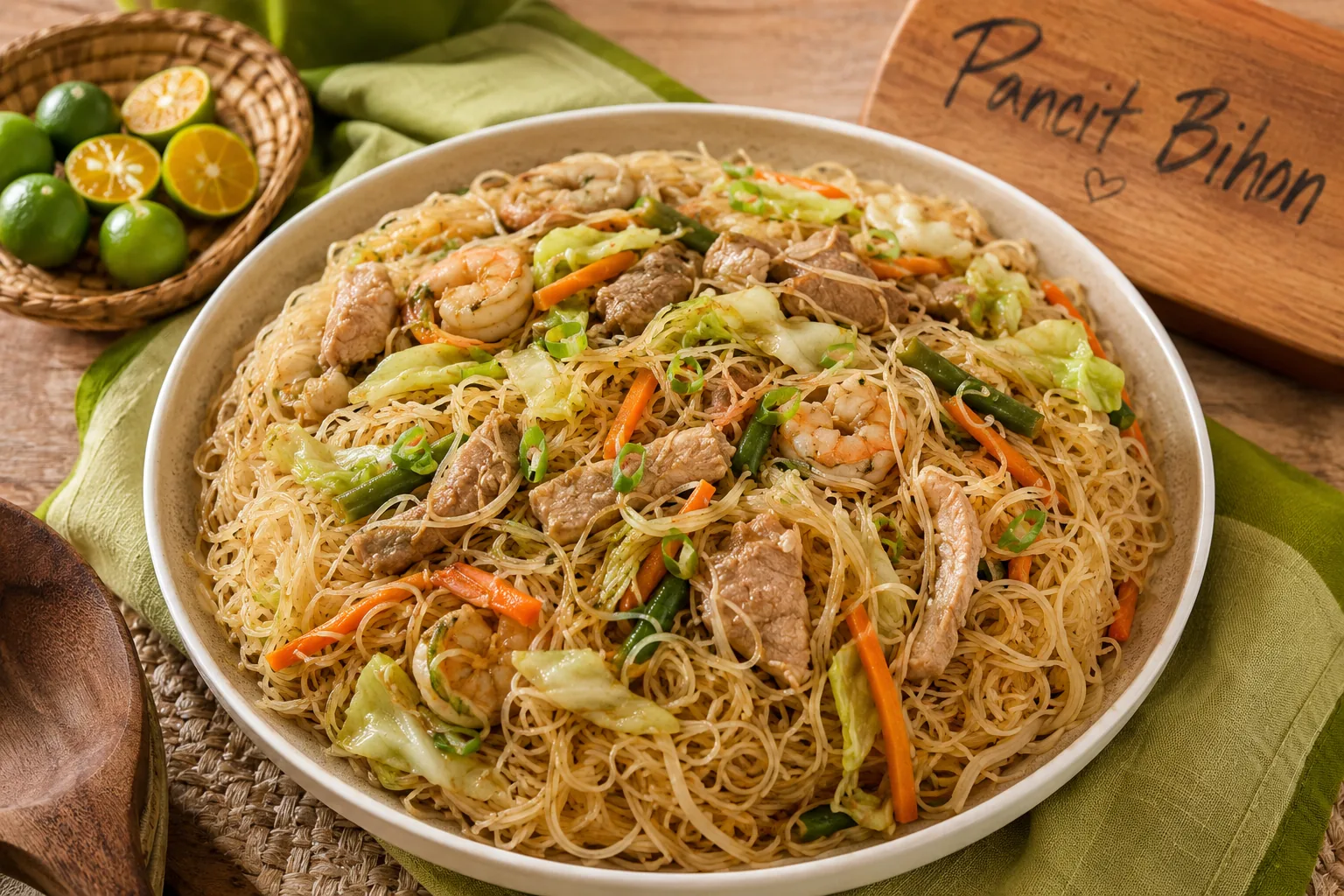
Filipino Pancit Bihon is one of the versions I grew up eating—thin rice noodles with meat and vegetables, usually with calamansi nearby for squeezing over your plate.
For the longest time, pancit was simply pancit to me. But once you start looking into the story behind it, that familiar plate of noodles gets a lot more interesting.
→ Want to make it? Get my Pancit Bihon Recipe
So, What Exactly Is Pancit Bihon?
First, pancit isn’t actually one specific dish.
It’s more like a whole family of Filipino noodle dishes, which explains why you can order pancit in two different places and end up with two very different plates.
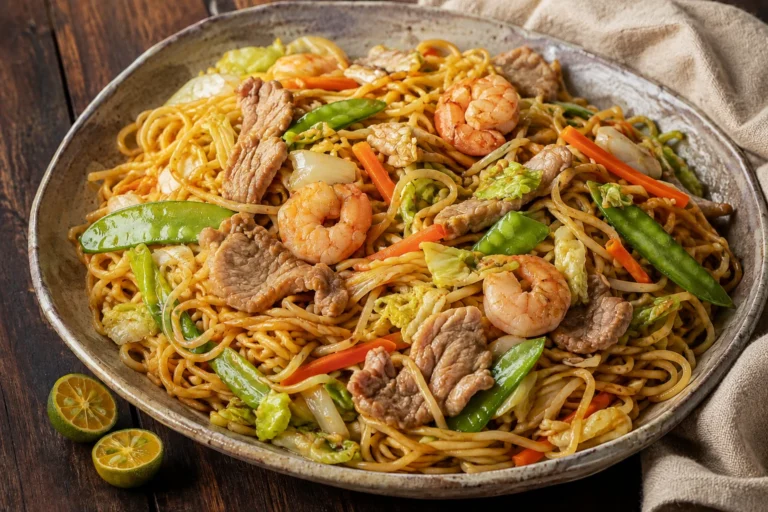
There’s Pancit Bihon, Pancit Canton, Pancit Malabon, Pancit Palabok, Pancit Habhab, Pancit Miki—and that’s definitely not the whole list.
Bihon refers to the thin rice noodles used in Pancit Bihon. They’re light and delicate once cooked, but what I really like about them is how they soak up the savory liquid they’re cooked in.
You’ll also hear the dish called Pancit Bihon Guisado. Guisado comes from guisa, referring to sautéing.
And like a lot of Filipino food, what actually ends up in the pan depends on who’s cooking it.
Pancit Has a Chinese Connection
This is one of those things I knew generally, but never really thought much about growing up.
Pancit has strong Chinese roots.
Chinese traders and settlers had been interacting with communities in the Philippine islands long before Spanish colonization, and Chinese influence eventually became part of many things we now recognize in Filipino food.
Noodles were one of them.
Even the word pancit is commonly traced to the Hokkien expression pian e sit, which is associated with food that is conveniently or quickly cooked.
But Filipinos being Filipinos, we didn’t stop at one noodle dish.
Over time, noodles were adapted to local ingredients and tastes, and different places developed their own versions.
That’s how something with Chinese roots eventually became something that feels completely at home on a Filipino table.
So Why Do We Eat Pancit on Birthdays?
This was the part that made me think, “Okay, that explains a lot.”
The tradition of eating long noodles for long life comes from Chinese culture, and that symbolism became part of Filipino birthday traditions too.
That’s also where the familiar idea of not cutting the noodles comes from—the long noodles represent a long life.
But growing up, I don’t remember sitting at a birthday party thinking, I must eat these noodles for longevity.
We just ate the pancit.
It was already part of what a birthday table looked like.
And I think that’s what happens with traditions sometimes. You grow up doing something because your parents did it, and their parents probably did it too. You don’t necessarily stop to ask where it came from.
It just feels normal.
Pancit Bihon Is Only One Kind of Pancit
This is something worth pointing out because when we say pancit, we could be talking about a lot of different dishes.
Pancit Bihon uses thin rice noodles.
Pancit Canton uses thicker wheat-and-egg noodles.
Pancit Malabon is associated with Malabon and is known for thicker noodles and its seafood-based sauce.
Pancit Palabok is another saucy version, usually topped with things like shrimp, egg, and other toppings.
And then there are plenty of regional pancit dishes that I didn’t grow up eating regularly—or haven’t even tried yet.
That’s one of the things I like about Filipino food. Even when you think you know a dish, there’s usually another version somewhere in the Philippines.
What Makes Filipino Pancit Bihon Different?
For Pancit Bihon, it really starts with the noodles.
Bihon noodles are thin rice noodles, and they’re really good at absorbing the flavor of whatever they’re cooked in.
That’s actually how I cook mine.
Instead of cooking the noodles separately, I let them cook in the seasoned liquid so they can soak up all that flavor.
Then there are the meat and vegetables.
Some families use pork. Some use chicken. Some use shrimp. Some combine them.
The vegetables can change too—cabbage, carrots, green beans, celery, snow peas. Everybody seems to have their own combination.
And I don’t think that’s a bad thing.
If you grew up eating your mom’s pancit one way and someone else’s family makes it completely differently, they’re probably both going to tell you theirs is the right one.
That’s Filipino food for you.
Why Does Pancit Always Feel Like Party Food?
Tradition is obviously part of it, especially because of the connection between noodles and long life.
But pancit is also just really practical party food.
You can make a big batch.
It feeds a lot of people.
You have noodles, meat, and vegetables all together.
And somehow it looks perfectly comfortable sitting beside everything else on a Filipino party table.
Especially lumpia.
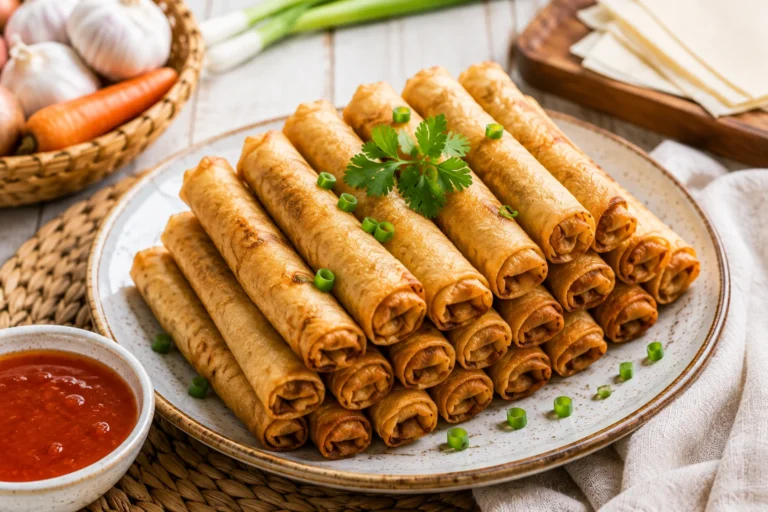
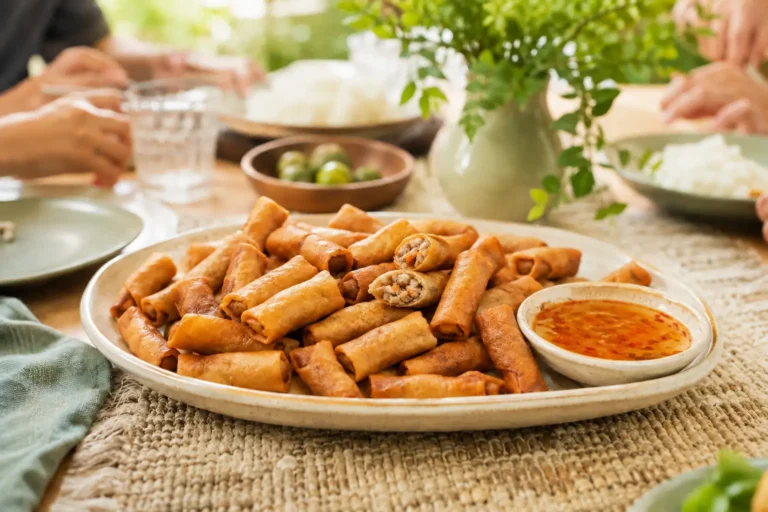
I don’t know why pancit and Lumpiang Shanghai work so well together, but they do. If both are on the table, I’m getting both.
Pancit also isn’t limited to birthdays. You’ll see it at holidays, fiestas, graduations, baptisms, weddings, family get-togethers, and sometimes just because somebody felt like making pancit.
Basically, give Filipinos a reason to gather and pancit has a pretty good chance of showing up.
Don’t Forget the Calamansi
For me, Pancit Bihon is even better with calamansi.
Just squeeze a little over the noodles right before eating.
That little bit of citrus cuts through the savory flavor and brightens everything up.
It’s such a small thing, but it’s one of those details that makes the plate feel complete to me.
And if there’s Lumpiang Shanghai beside it?
Even better.
It’s Funny What You Learn From a Plate of Noodles
I’ve eaten pancit for years without really thinking about any of this.
It was birthday food. Party food. Food you ate with family.
That was enough.
But learning a little about where it came from made me appreciate something I had always taken for granted.
Pancit carries a piece of the long history between Chinese and Filipino culture, but Filipinos took those noodles and made them our own. Different regions made their own versions. Different families made their own versions. And somewhere along the way, pancit became part of how we celebrate.
Maybe that’s why food stories like this are so interesting to me.
You start with something you’ve eaten your whole life, ask one simple question—Why do we eat this?—and suddenly there’s a whole story behind it.
But at the end of the day, Pancit Bihon is still what it has always been for me:
A big plate of noodles, preferably with lumpia nearby, shared with people you love.
And really, that’s probably the best part.